

This is a longer episode, so I figured I would post it a little early. Tuesday’s (6/2/26) episode will post at its normal time.
~~~~~
Cindy silently sighed as she looked at Brooklyn’s homework.
She knew Brooklyn had waited.
Not lazily. Not accidentally. Diligently.
Brooklyn had not called because she suddenly needed help. She had waited until the right assignment came along.
Brooklyn was not the smartest person in the school. She got good grades, but not Madison grades. Not effortless straight A’s. But Brooklyn made up for that elsewhere. She was cunning. Strategic. People smart in a way that made Cindy uneasy even before she had become small enough to fit in Brooklyn’s hand.
Brooklyn had probably looked at the class syllabus and seen this assignment coming.
Maybe she had smiled when she read the title.
Maybe she had known exactly what it would do to Cindy.
Cindy looked at question two.
Explain how a pellet-based diet enhances the life and nutritional health of your Little, making you a good Guardian and person.
Cindy stared at the words for a long moment.
The wording was clumsy. Clearly written for students. Simplified. Moralized. A question designed to make seventh graders connect daily care to virtue.
But the bones of it were familiar.
Too familiar.
She could see the adult version underneath. The policy memo version. The training manual version. The language she had supported because it was clear, efficient, and necessary. Littles needed stability. Guardians needed standards. Schools needed to normalize best practices early so children did not grow into careless, permissive adults who confused compassion with poor care.
Cindy still believed that.
That was the worst part.
She believed in the structure. The hierarchy. The biological reality. The practical need for specialized food, restricted diets, behavioral consistency, and Guardian accountability.
She just was not one of them.
Not really.
She was Cindy Wessen.
She was a person trapped in a Little body.
That was different.
It had to be different.
Her fingers hovered over the tablet keyboard.
Then she began to type.
A pellet-based diet enhances a Little’s life because it provides complete nutrition in a form designed specifically for Little biology. Human food can be too rich, too large, too difficult to digest, or unsafe for a Little’s smaller body. Pellets allow a Guardian to make sure their Little receives the correct balance of protein, vitamins, minerals, hydration support, and digestive stability without guessing or accidentally giving them something harmful.
Cindy stopped.
Her jaw tightened.
She could hear herself saying it.
Not as Brooklyn.
As herself.
Years ago. In meetings. In training sessions. In polite conversations with donors who wanted reassurance that the system was humane. She had used phrases like complete nutrition and digestive stability so often they felt almost automatic.
She kept typing.
A responsible Guardian does not feed a Little based on what the Little misses or begs for. A responsible Guardian feeds them based on what their body needs. This helps prevent sickness, choking hazards, food addiction behaviors, and confusion between human habits and Little routines. By keeping meals consistent, the Guardian helps the Little adjust to their new life and understand that they are cared for through structure.
Her hands froze.
What the Little misses or begs for.
Cindy looked across the room.
Greg still had the Pizza Roll.
Madison had opened it for him. Helped him. Watched him like it was sweet.
Cindy looked back down before anyone noticed.
She continued.
Pellets also help create a healthy relationship between the Guardian and the Little. The Little learns that food comes from the Guardian and that eating properly is part of trust and obedience. When a Guardian provides the right food and does not give in to unsafe people-food habits, the Little learns security. This makes the Guardian a good caregiver because they are choosing long-term health over short-term emotion.
Cindy swallowed.
There it was.
That was the part she still believed.
Long-term health over short-term emotion.
That had always been one of her lines.
People got sentimental. They projected human desires onto Littles because the Littles looked familiar, sounded familiar, or cried familiar tears. But responsible care meant seeing beyond the emotional performance. Seeing the biology. The category. The reality.
She had argued that more than once.
She had meant it.
She still meant it.
Just not for her.
Her fingers shook as she typed the final paragraph.
A pellet-based diet also makes society safer and more organized because it gives Guardians a standard way to care for Littles at home, in school, and in public. If every Guardian follows the same nutritional expectations, Littles are healthier, easier to manage, and less likely to develop bad habits. A Guardian who feeds pellets is not being cruel. They are showing maturity, responsibility, and love by giving their Little the food that is best for them, even if the Little does not understand or appreciate it at first.
Cindy stared at the completed answer.
It was good.
That was the problem.
It was exactly the kind of answer Brooklyn needed. Clear. Complete. In the right tone. Not too advanced, but strong enough for a good grade.
And it was true.
At least, it was true for Littles.
Real Littles.
The ones who needed this.
The ones who had been reborn into dependency.
The ones Cindy had spent years talking about, legislating around, and building systems for.
Not her.
She was not begging for people food because she was confused.
She missed it because she remembered being human.
She was not resisting pellets because she needed firmer adjustment.
She resisted because she understood what had been taken.
Cindy looked at the question again.
Making you a good Guardian and person.
Her lip curled slightly.
That phrasing was childish. Moralistic. Too neat.
But she knew why it was there.
They were teaching the children that good care and good character were the same thing. That to feed pellets was not just nutritionally correct, but morally correct. That denying human food was not meanness. It was proof of maturity.
Cindy had helped make that language acceptable in schools.
And now Brooklyn Reynolds would turn it in.
Probably get praised for it.
Maybe even read part of it aloud.
Cindy lowered her hands from the keyboard and sat very still.
Across the room, Greg laughed softly at something Madison said.
Cindy did not look up.
She saved the answer.
Then she moved to question three.
Cindy moved to question three.
She already hated it before she finished reading.
Explain how providing chores and jobs for your Little creates positive reinforcement for your Little and why bad Guardians and people may ignorantly feel this is abusive or exploitive to the Little.
Cindy stared at the question.
There it was again.
Simplified.
Moralized.
Written in the blunt, almost cheerful language of a school curriculum trying to turn doctrine into homework.
But the foundation was hers.
Not hers alone, of course. Cindy had not written every line. She had not personally drafted every training module, every school prompt, every cheerful classroom worksheet about Little adjustment and Guardian responsibility.
But she had supported it.
Defended it.
Fundraised for the people who implemented it.
Spoken at events where the same ideas were dressed in better language.
Meaningful contribution.
Structured purpose.
Household integration.
Reward-based adjustment.
She had never called it exploitation.
That was the point.
Exploitation was what happened when someone used a Little without structure, safety, affection, or proper Guardian oversight. Chores were different. Jobs were different. Tasks were different. A Little who contributed to the household was not being abused. They were being given purpose.
Cindy still believed that.
For Littles.
Her fingers hovered over the keyboard.
Then she began to type.
Providing chores and jobs for a Little creates positive reinforcement because it gives the Little a clear purpose within the household. Littles need structure, routine, and opportunities to be useful. When a Guardian gives a Little an age-appropriate or size-appropriate task, the Little learns that their actions matter and that they can contribute to the happiness and order of the home.
Cindy stopped.
Her eyes lingered on the sentence.
Opportunities to be useful.
Brooklyn had called her useful.
Madison had called her useful.
Even Evan had said it in that casual, bright way that made Cindy want to tear the word out of the air.
Useful.
She had once used that word without hesitation. It had sounded kind then. Productive. Dignified. A way to prevent Littles from sinking into despair or identity confusion. A Little with nothing to do would obsess over what they had lost. A Little with work would adjust.
That was what Cindy had believed.
That was what she still believed.
Except now work meant Madison’s homework. Brooklyn’s science answers. Ava’s assignment waiting in the folder. Cleaning tasks done in a humiliating little harness while Madison judged whether she had done them well enough.
Cindy swallowed and continued typing.
Chores also allow a Guardian to reward good behavior immediately. If a Little completes a task properly, the Guardian can provide praise, affection, treats, extra recreation time, or other privileges. This teaches the Little that obedience and effort lead to positive outcomes. Over time, the Little begins to associate service with safety, approval, and emotional satisfaction.
Her hands went still.
She could feel Evan’s finger brushing over her head earlier.
Go on. You’re good at this.
She could feel the terrible flicker of warmth that praise had caused.
Brooklyn had called it science.
Cindy hated that Brooklyn was right.
Not about Cindy.
About the mechanism.
Positive reinforcement worked. Praise worked. Rewards worked. That had never been in question. The question was whether it should be used on someone like her.
It should not.
She was not some confused Little needing to be shaped into a household role. She was Cindy Wessen. She remembered her career. Her marriage. Her children. Her house. Her influence. Her body had changed, but her mind had not collapsed into some petlike blankness.
She knew exactly what was being done to her.
That made it different.
It had to.
She looked back at the answer and resumed.
Some people may think chores are abusive or exploitive because they incorrectly view Littles through a human framework. They may believe that asking a Little to work is the same as forcing a human to work without freedom or payment. This misunderstanding can come from emotional thinking, outdated ideas, or discomfort with accepting that Littles have different needs than humans.
Cindy’s jaw tightened.
There it was.
The divide.
Human framework.
Little needs.
She had used that distinction often. It was useful. Clean. Almost impossible to argue with once accepted. Anyone who objected was simply thinking emotionally. Anyone who questioned the system was failing to recognize biological reality.
Cindy could hear herself explaining it at a donor dinner.
She could see heads nodding.
She could see Greg beside her, quiet, polite, not pushing back enough.
She could see Madison younger, half-listening from nearby.
Had Madison learned it then?
Or later?
Had Cindy placed every brick herself and only noticed the wall once it surrounded her?
She kept typing.
A good Guardian understands that chores are not abusive when they are properly supervised, safe, and matched to the Little’s size and ability. The purpose is not to exploit the Little, but to help them develop discipline, confidence, and healthy dependence on their Guardian. A Little who helps clean, organize, complete simple tasks, or assist their Guardian is not being harmed. They are being included in the household in a way that supports adjustment.
Cindy’s throat tightened.
Included.
That word was almost funny.
She looked around the living room.
The girls were still talking above her. Brooklyn was laughing. Krysi was arguing with Madison about something on the television. Ava had gone to the kitchen and returned with another drink. Greg sat in Madison’s lap, small and careful but visibly present in the conversation.
Cindy was included too, technically.
Included as labor.
Included as a cautionary joke.
Included as Madison’s mother turned homework assistant.
Her fingers pressed harder against the tablet screen.
Bad Guardians or uninformed people may call this exploitive because they focus only on the task instead of the relationship. They do not understand that a Little serving their Guardian can be emotionally stabilizing. When a Little completes a chore and receives praise, they learn trust. They learn their place in the home. They learn that making their Guardian’s life easier is a positive and loving part of their role.
Cindy stared at that final sentence.
Making their Guardian’s life easier.
That was the entire point, wasn’t it?
Strip away the language, the studies, the training modules, the cheerful school worksheets, and that was what remained.
Making human lives easier.
Making Madison’s life easier.
Making Brooklyn’s life easier.
Making Ava’s life easier.
The prompt called it a good thing.
Cindy had called it a good thing too.
She still believed it could be.
A properly trained Little with appropriate tasks could find comfort in usefulness. It gave rhythm to the day. It prevented destructive fixation. It reinforced the Guardian bond. It helped the household function.
But homework was not a Little chore.
It was academic dishonesty.
Cleaning Madison’s bathroom in a harness was not household inclusion.
It was humiliation.
Being passed between Madison’s friends for assignments was not structured contribution.
It was exploitation.
The word sat in her mind, heavy and dangerous.
Exploitation.
Cindy looked at the question again.
Why bad Guardians and people may ignorantly feel this is abusive or exploitive…
She hated the misspelling.
She hated more that the answer expected her to deny the exact word that had formed in her mind.
Her fingers moved again.
This does not mean a Guardian should be careless or cruel. A good Guardian must give tasks that are safe, reasonable, and beneficial. They must notice signs of stress and provide correction, rest, or encouragement when needed. The difference between positive household jobs and abuse is Guardian intent, supervision, and whether the task helps the Little become healthier, calmer, and better adjusted.
She paused.
That was the escape hatch.
Guardian intent.
Supervision.
Adjustment.
Madison would say her intent was good. Brooklyn would say Cindy was helping. Evan would say Cindy was learning. McKenzie might object to pieces of it, but even McKenzie still kept Greg in a habitat and fed him Little food and decided what was best.
Everyone could find their justification if the system gave them enough words.
Cindy had helped give them the words.
She finished the answer.
Therefore, providing chores and jobs is part of good Guardian care because it turns obedience into something rewarding. It teaches Littles that they are safest and happiest when they contribute, listen, and accept guidance. A Guardian who uses chores properly is not exploiting their Little. They are giving their Little purpose, structure, and a healthy way to belong.
Cindy saved the response.
For a long moment, she just stared at it.
It was a good answer.
Brooklyn would get full credit.
Maybe the teacher would even write something approving in the margin. Strong explanation. Good understanding of Guardian ethics. Excellent connection to positive reinforcement.
Cindy could already imagine it.
The lesson would continue.
The children would learn.
More Brooklyns, more Madisons, more Evans would absorb the language and carry it home. They would repeat it in living rooms and classrooms and Little supply stores. They would call it care. They would call it responsibility. They would call it love.
And Cindy would still believe most of it.
That was the part she could not escape.
She did not think the system was wrong.
She thought the system had misclassified her.
Cindy looked across the room toward Greg.
He was still in Madison’s lap. Still being petted softly. Still allowed to exist as Dad in ways Cindy was not allowed to exist as Mom.
Maybe because he had adjusted.
Maybe because he had surrendered.
Maybe because he had always been better at being loved without controlling the shape of it.
Cindy looked back down at the tablet.
Question four waited beneath the answer box.
She inhaled slowly.
Then she moved on.
Cindy stared at question four.
Using your answers from question two and three and using academic supporting resources from the book and the Right Side of Small Podcast series by Cindy Wessen, explain how Little physiology requires the kind of care Guardians provide and how treating your Little like a person or equal endangers the Little’s life and livelihood while also propagating dangerous thoughts and ideals which can lead to what is considered Little Abuse by teaching false ideas to your Little.
She took a slow breath.
Of course she knew this one. She had written the Right Side of Small episode on exactly this topic. She had debated it at conferences. She had insisted on this language in the school curriculum. Littles were not humans. They were not equal. That was not cruelty. It was biology. It was responsibility. It was survival.
And now she had to type it herself, in Brooklyn Reynolds’ homework submission box.
She pinched the tablet and began:
Little physiology is fundamentally different from human physiology. Littles have smaller organ mass, higher surface area-to-volume ratios, faster metabolism, and specific nutrient requirements that differ significantly from humans. This means that human food, irregular schedules, and incorrect environmental stimuli can cause rapid health deterioration, malnutrition, and serious long-term consequences. Guardians exist to provide structured care, nutrition, reinforcement, and safety protocols that Littles cannot access or manage independently.
She paused.
That was textbook. Clinical. Polished. Clean. Perfect for the assignment.
Her own words, once again, now applied to herself.
Her stomach twisted.
She kept typing, forcing herself to detach from the irony:
Treating a Little as a person or equal is not merely a philosophical error; it introduces tangible physical risk. Feeding human meals, encouraging independent decision-making without guidance, or allowing unsupervised access to unsafe environments can result in choking, nutrient deficiency, dehydration, and dangerous behavioral development. Beyond physical consequences, promoting the idea that Littles are independent moral agents propagates false ideologies, teaching Littles they can disregard Guardian instruction. This undermines structure, erodes trust, and constitutes a form of psychological abuse.
Cindy’s hands tightened around the tablet.
Her mind whispered: And yet here I am.
She imagined the past year. Madison’s homework. Brooklyn’s questions. Ava’s polite curiosity. Evan’s hand beneath her. Greg’s soft gaze. The house had become a laboratory of her own doctrines.
She forced herself to continue:
Academic studies, including the Right Side of Small Podcast series by Cindy Wessen, support these conclusions. Research shows Littles demonstrate optimal cognitive and emotional development when provided consistent care, structured guidance, and reinforcement appropriate to their size and capability. Guardians are trained to recognize physiological and psychological stress markers that a Little cannot self-manage. Ignoring these needs, whether from misplaced sympathy or misunderstanding, is classified as Little Abuse by contemporary best practice standards.
She stopped again. Her fingers hovered over the keyboard.
It was true.
It was still true.
She had created this framework.
She had defended it.
She had legislated for it in private circles and public forums alike.
And yet here she was.
Subjected to it.
Her body reduced to a Little.
Her autonomy stripped.
Her intellect dismissed.
Her principles applied against her.
The next paragraph was harder, but necessary:
Therefore, responsible Guardians understand that Littles require care, reinforcement, and structure to thrive. They do not treat Littles as equals, because equality in this context is fatal. A Little’s survival depends on compliance with safe practices, measured nutrition, and guided daily routines. Failure to maintain these standards endangers not only the Little’s health and development but also the societal framework designed to protect Littles from neglect and harm.
Cindy exhaled slowly.
She could not lie. She still believed this.
She could not apologize for it.
Her mind scolded her: It is the system. You built it. You shaped it. You believed in it. It works. It’s just not supposed to be applied to you.
Finally, she typed the last line.
In sum, proper Guardian care is both a moral and practical imperative. Littles are not humans shrunk; they are distinct beings requiring tailored guidance. To misclassify them as equal agents is to invite harm, undermine structured development, and propagate ideas that have been shown to lead to physical and psychological abuse. A Guardian’s role is to ensure that the Little’s life is safe, productive, and fulfilling within the framework defined by their physiology and training.
Cindy saved the assignment.
The words were hers.
The logic unassailable.
The irony unbearable.
She looked across the room at Greg, at Madison, at Charity.
All of it reflected back at her.
Her life had been legislated, structured, and taught—now applied to herself.
Her fingers hovered over the next assignment.
Question five awaited.
And Cindy had no intention of resisting.
Cindy moved to question five.
She almost wished she had stopped at question four.
Almost.
But Madison would check. Brooklyn would check. And if Brooklyn did not, Evan would. Someone would notice if Cindy left an answer blank, and then the whole room would become interested in why.
So Cindy read the next prompt.
Using the textbook and The Right Side of Small podcast series by Cindy Wessen, explain why a Little claiming to be “a person trapped in a Little body” is considered a dangerous adjustment failure rather than proof of human identity. How should a responsible Guardian respond to these claims, and why does validating them place the Little at risk of psychological harm?
For a moment, the living room vanished.
The laughter.
The television.
Madison’s voice.
Brooklyn’s feet kicked up on the couch.
Evan’s lap beneath her.
Charity sitting nearby like a quiet little shadow of everything Cindy was failing to become.
All of it faded beneath the weight of that phrase.
A person trapped in a Little body.
Cindy stared at the words.
That was her phrase.
Maybe not hers originally. Others had used it too. Resistant Littles. Their sentimental family members. Anti-Guardian activists. Softhearted fools who could not accept biological reality. People who looked at a Little and saw only memory, not category.
Cindy had argued against that phrase for years.
She had called it dangerous.
Self-deceptive.
A maladaptive identity claim.
A barrier to adjustment.
A phrase that made Guardians hesitate and Littles suffer longer than necessary.
She had said all of that.
And now it was the only phrase that still felt true when she thought about herself.
Her fingers hovered over the keyboard.
She did not feel guilty.
That was important.
Cindy did not believe she had been wrong. Not broadly. Not systemically. Not in the ways that mattered. Littles needed structure. Guardians needed authority. Society needed clear lines or everything became chaos disguised as compassion.
She still believed that.
She simply was not one of them.
Not in the way they meant.
Not in the way Brooklyn meant.
Not in the way Madison meant when she looked down at Cindy and said Little.
Cindy was Cindy Wessen.
She was not some confused reborn creature clinging to scraps of former identity.
She remembered everything.
She understood everything.
That made it different.
It had to.
She began typing.
A Little claiming to be “a person trapped in a Little body” should be understood as a dangerous adjustment failure, not as evidence of continued human identity. According to the textbook and Cindy Wessen’s The Right Side of Small podcast, this claim usually occurs when a Little is resisting proper classification and attempting to preserve a former social role that no longer matches their physiology, legal status, or care needs.
Cindy stopped.
Former social role.
Mother.
Wife.
Homeowner.
Adult.
Human.
Her jaw tightened.
She kept going.
A responsible Guardian should not validate this claim, even if the Little becomes emotional or upset. Validation can confuse the Little and reinforce the false belief that they are still equal to humans or capable of managing their own care. Instead, the Guardian should respond with calm correction, consistent language, proper titles, structured routine, and positive reinforcement when the Little accepts their actual status.
Her eyes flicked upward despite herself.
Madison was laughing at something Krysi said, one hand still resting around Greg in her lap. Greg looked up at her with that tired softness Cindy hated and envied in equal measure.
Proper titles.
Consistent language.
Madison had learned that well.
Ms. Wessen.
Mistress Wessen.
Ms. Reynolds.
Ms. Kingsley.
Cindy had once argued that titles helped reinforce role clarity. They prevented emotional slippage. They gave a Little language to understand who held responsibility and who received care.
Now every title felt like a tiny lock clicking into place.
She typed faster.
When a Guardian allows a Little to repeat false identity claims, the Little may become more resistant, anxious, entitled, and unsafe. They may refuse appropriate food, reject necessary handling, attempt unsafe independence, or challenge Guardian authority in ways that place them at risk. This is harmful because the Little’s body and social position are no longer human, even if the Little retains memories from before adjustment.
Her fingers froze.
Even if the Little retains memories.
That line felt too close.
Too precise.
Cindy had to remind herself that the answer was for Brooklyn. A student answer. A homework response. Nothing more.
But the question had asked for The Right Side of Small.
Her podcast.
Her voice.
Her name.
She continued.
The Right Side of Small explains that memory is not the same as current identity. A Little may remember being human, but a Guardian must care for the Little according to what the Little is now. Treating past memories as proof of current equality is emotionally appealing but biologically irresponsible. It teaches the Little that resistance is reasonable and that Guardian care is optional.
Cindy’s throat tightened.
She could hear herself saying that.
She could hear the polished podcast version of her voice.
Warm. Firm. Reasonable. The kind of voice people trusted because it did not sound cruel. It sounded informed.
Therefore, validating the belief that a Little is merely a shrunken person can become psychological abuse because it interferes with lawful adjustment. It teaches dangerous false ideas, delays acceptance, and may cause the Little to reject the very care needed to keep them safe, healthy, and stable. A good Guardian protects the Little by refusing to support harmful self-concepts, even when correction is emotionally difficult.
Cindy stared at the answer.
It was good.
Clean.
Educational.
Defensible.
It was also a direct argument against every plea she had made since waking up small.
She did not feel guilty.
She felt miscategorized.
That was different.
She saved the answer and moved to question six.
Using examples from the textbook and The Right Side of Small, explain why privileges such as clothing, glassware, people food, public outings, and social inclusion must be earned through safe behavior, obedience, and emotional stability. Why is allowing a Little to receive these privileges before they are ready dangerous for the Little, damaging to Guardian authority, and harmful to long-term adjustment?
Cindy’s mouth went dry.
Clothing.
Glassware.
People food.
Public outings.
Social inclusion.
It was like the assignment had been written around her humiliation.
Maybe it had not been. Maybe that was the worst part. Maybe this was just the curriculum. A normal assignment. A normal question for students learning how to become responsible Guardians.
Cindy’s life had become so perfectly aligned with the textbook that ordinary homework now felt personally designed to punish her.
She looked at Greg again.
He had clothes now because McKenzie had insisted. He had people food because Madison allowed it. He had social inclusion because he was calm enough, soft enough, grateful enough to sit in Madison’s lap and be petted while the girls talked around him.
Cindy had none of that.
Not reliably.
Not freely.
Because she had not earned it.
The words formed in her mind before she could stop them.
She hated that.
She began typing.
Privileges such as clothing, glassware, people food, public outings, and social inclusion must be earned because each one requires a Little to demonstrate safe behavior, obedience, and emotional stability. These privileges are not rights. They are tools Guardians may use to support adjustment when the Little is ready. If provided too early, they can create confusion, entitlement, and unsafe expectations.
Her hands tightened.
Not rights.
Tools.
That had always been central.
A Guardian did not deny a Little things out of cruelty. A Guardian withheld privileges until the Little could safely handle them. That was good care. That was responsible. That was what separated a trained Guardian from an indulgent fool.
Cindy still believed that.
For Littles.
She forced herself to continue.
Clothing, for example, can support dignity and public presentation when a Little behaves properly. However, if a resistant Little receives clothing before accepting Guardian authority, the Little may interpret it as proof that they are still equal to humans. This can increase defiance and make correction harder. Clothing should therefore be connected to behavior, gratitude, and the Guardian’s judgment.
Cindy looked down at herself.
Her own minimal clothing suddenly felt heavier than fabric.
Madison had said it often.
Littles earned clothes.
Cindy had said it first.
She typed again.
Glassware and people food present both physical and behavioral risks. A Little who has not demonstrated coordination, patience, and obedience may choke, spill, become sick, or embarrass their Guardian in public. Human food can also encourage begging, nostalgia, and unhealthy attachment to former human routines. A responsible Guardian protects the Little by using safe feeding methods and Little-specific nutrition until the Little is stable enough for limited exceptions.
Her face burned.
Emma’s house came back in a flash.
The little glass.
The water spilling.
Her coughing.
Trina and Charity drinking properly while Cindy lapped from a saucer.
Madison’s humiliation.
This is why you don’t go places.
Cindy blinked hard.
She kept typing.
Public outings and social inclusion must also be earned because a Little’s behavior reflects directly on the Guardian. If a Little argues, refuses titles, speaks out of turn, or insists on false equality in public, the Guardian’s reputation is damaged and the Little’s adjustment is harmed. The Little may learn that public attention gives them power over the Guardian, which encourages manipulation and resistance.
Her eyes flicked to Charity.
Charity sat near her in Evan’s lap, quiet and composed. Included. Trusted. Allowed.
Cindy looked away.
The Right Side of Small emphasizes that early privileges should never be used to soothe Guardian guilt. A Guardian may feel sympathy for a Little who misses human routines, but giving privileges before readiness teaches the wrong lesson. The Little learns that sadness, resistance, or old identity claims can produce rewards. This undermines long-term adjustment and may place the Little in danger.
Cindy exhaled slowly.
Guardian guilt.
McKenzie.
That was McKenzie.
McKenzie with Greg’s nice habitat. McKenzie with clothes. McKenzie with softness. McKenzie trying to make Dad feel like Dad while still controlling where he slept, what he ate, and when he moved.
Cindy wondered if McKenzie knew how close she was to violating the very principles she claimed to soften.
No.
Not violating.
Modifying.
McKenzie would call it compassion.
Cindy would have called it permissive instability if anyone else had done it.
She finished the answer.
Therefore, a good Guardian introduces privileges gradually and only after the Little proves they can handle them. This protects the Little’s body, supports emotional stability, preserves Guardian authority, and teaches that freedom within care is earned through trust. Providing privileges too early is not kindness. It is dangerous permissiveness that may become psychological abuse if it encourages false beliefs about equality, independence, or human status.
Cindy saved the answer.
Her hands were trembling now.
Not with guilt.
With anger.
With humiliation.
With the unbearable feeling of being correct and still trapped by her own correctness.
At the bottom of the assignment, one final section appeared.
Required Student Certification.
Cindy stared at it.
Copy the following statement in your own handwriting or type it exactly to certify that you understand the legal and ethical requirements of proper Little care.
Below it was the disclaimer.
Cindy read it once.
Then again.
I understand that psychological abuse of a Little is a federal crime. I understand that encouraging false human identity, equality-based thinking, resistance to Guardian care, or unsafe independence may constitute psychological abuse by interfering with a Little’s lawful adjustment, safety, and well-being. I understand that responsible Guardian care requires correction, structure, and refusal to validate harmful self-concepts that endanger the Little.
Cindy’s vision blurred at the edges.
A federal crime.
The words sat there, official and heavy.
Not feeding pellets.
Not assigning chores.
Not denying glassware.
Not refusing to call her equal.
The crime, according to the system she had helped support, would be telling her she was right.
The crime would be validating her.
The crime would be saying: yes, Cindy, you are a person trapped in a Little body.
She stared at the disclaimer.
Then, slowly, carefully, with the same precision she had once admired in policy language, Cindy typed it out exactly.
I understand that psychological abuse of a Little is a federal crime. I understand that encouraging false human identity, equality-based thinking, resistance to Guardian care, or unsafe independence may constitute psychological abuse by interfering with a Little’s lawful adjustment, safety, and well-being. I understand that responsible Guardian care requires correction, structure, and refusal to validate harmful self-concepts that endanger the Little.
She submitted the assignment.
For several seconds, Cindy simply sat there with the tablet in her lap.
Above her, the girls kept talking.
Greg laughed softly at something Madison said.
Charity remained quiet beside her.
No one noticed that Cindy had just typed out a legal declaration against her own personhood.
Or maybe they did.
Maybe Brooklyn would notice later.
Maybe that had been the point.

That is some serious self hate.
It’s the Cindy way
She’s just a self hating little who is stuck in the world she created and she would be like a house slave in the 1800s who thinks she deserves better just cause she’s in the house rather than in the field….. dear god I hate people like you Cindy!
I can understand that viewpoint. She definitely thinks she deserves better.
1) “Brooklyn had not called because she suddenly needed help. She had waited until the right assignment came along.” seems like she put more thought into this than Madison would have.
2) “She got good grades, but not Madison grades. Not effortless straight A’s.” Are all your protagonist-guardians straight-A students? Sara is, Dayton is, Mal is, and now Madison is. I don’t think anyone else’s academics have been explicitly mentioned.
3) “The wording was clumsy. Clearly written for students. Simplified. Moralized. A question designed to make seventh graders connect daily care to virtue.” Not too different from indoctrination in the real world
4) “She was a person trapped in a Little body.” She’s not trans-size, she’s just confused
5) “In polite conversations with donors who wanted reassurance that the system was humane” she’d have been lying through her teeth
6) “A responsible Guardian does not feed a Little based on what the Little misses or begs for. A responsible Guardian feeds them based on what their body needs.” do not mistake control for responsibility
7) “People got sentimental. They projected human desires onto Littles because the Littles looked familiar, sounded familiar, or cried familiar tears. “Also, because Littles have fully human minds.
8) “It was exactly the kind of answer Brooklyn needed. Clear. Complete. In the right tone. Not too advanced, but strong enough for a good grade.” well, she knows her shit, that’s for sure
9) “At least, it was true for Littles. – Real Littles. Not her.” Damn it Cindy
10) “She was not begging for people food because she was confused. She missed it because she remembered being human. She was not resisting pellets because she needed firmer adjustment. She resisted because she understood what had been taken.” Such a lack of empathy.
11) “Explain how providing chores and jobs for your Little creates positive reinforcement for your Little and why bad Guardians and people may ignorantly feel this is abusive or exploitive to the Little.” Oh fuck you, they may as well ask “explain why enslaving your Little is ok and people who tell you otherwise are stupid.
12) “Not hers alone, of course. Cindy had not written every line. She had not personally drafted every training module, every school prompt, every cheerful classroom worksheet about Little adjustment and Guardian responsibility.” That’s true, as much as Cindy is to blame, it’s important to remember these beliefs were already popular before her.
13) “A Little who contributed to the household was not being abused. They were being given purpose.” That can be true, but it needs to be adjusted to said Little’s wants and needs, and anyone attempting to do it without Little’s consent or input is abusive and exploitative.
14) “Opportunities to be useful. Brooklyn had called her useful. Madison had called her useful.” I Love how it’s sinking in for her
15) “She had once used that word without hesitation. It had sounded kind then. Productive. Dignified. A way to prevent Littles from sinking into despair or identity confusion. A Little with nothing to do would obsess over what they had lost. A Little with work would adjust” doesn’t sound as nice ” from the other side.
16) “This teaches the Little that obedience and effort lead to positive outcomes. Over time, the Little begins to associate service with safety, approval, and emotional satisfaction.” That is how training/brainwashing works
17) “Her body had changed, but her mind had not collapsed into some petlike blankness.” that’s actually true of all Littles, that’s why Preema Tech invented a chip to make it happen
18) “Had Cindy placed every brick herself and only noticed the wall once it surrounded her?” yep
19) “They do not understand that a Little serving their Guardian can be emotionally stabilizing.” but that has to be earned, not forced like most guardians
20) “Making their Guardian’s life easier. That was the entire point, wasn’t it? Strip away the language, the studies, the training modules, the cheerful school worksheets, and that was what remained.” That is what most guardians believe, at least, that we’ve seen.
21) “But homework was not a Little chore. It was academic dishonesty.” True
22) “Cleaning Madison’s bathroom in a harness was not household inclusion. It was humiliation” Yeah, the Cruzs did that one on purpose
23) “Being passed between Madison’s friends for assignments was not a structured contribution. It was exploitation.” just like you pretended not to preach
24) “She hated more that the answer expected her to deny the exact word that had formed in her mind.” That’s literally the point
25) “A good Guardian must give tasks that are safe, reasonable, and beneficial.” Problem being those last to are subjective.
26) “Everyone could find their justification if the system gave them enough words. Cindy had helped give them the words” Really loving this shit on Cindy fest
27) “A Guardian who uses chores properly is not exploiting their Little.” But the line between probably and exploiting is largely blurred
28) “More Brooklyns, more Madisons, more Evans would absorb the language and carry it home. They would repeat it in living rooms and classrooms and Little supply stores. They would call it care. They would call it responsibility. They would call it love.” just like Cindy intended
29) “using academic supporting resources from the book and the Right Side of Small Podcast series by Cindy Wessen” get bent, Cindy
30) “how treating your Little like a person or equal endangers the Little’s life and livelihood while also propagating dangerous thoughts and ideals which can lead to what is considered Little Abuse by teaching false ideas to your Little.” truely some disgusting sentences in this homework
31) “They were not equal. That was not cruelty. It was biology. It was responsibility. It was survival.” Not too long ago, people were saying the same things about women (some currently say the same about men)
32) “Academic studies, including the Right Side of Small Podcast series by Cindy Wessen, support these conclusions.” Publisher bias is one hell of a drug
33) “societal framework designed to protect Littles from neglect and harm.” Littles are simultaneously one of the most and least protected groups I’ve seen
34) “explain why a Little claiming to be “a person trapped in a Little body” is considered a dangerous adjustment failure rather than proof of human identity.” oh damn, she literally set herself up for that one
35) “Anti-Guardian activists” hoping we see/learn more of them
36) “Society needed clear lines or everything became chaos disguised as compassion.” It does, but in moderation.
37) “She remembered everything. She understood everything. That made it different.” She must have spent too much time around the memory-wiped Littles if she thinks that’s a difference.
38) “Proper titles. Madison had learned that well. Ms. Wessen. Mistress Wessen. Ms. Reynolds. Ms Kingsley.” Oh, that’s why they (and Mal) do that, figures it’d come from Cindy.
39) “It was also a direct argument against every plea she had made since waking up small.” Brooklyn picked a good moment to strike
40) “Using examples from the textbook and The Right Side of Small, explain why privileges such as clothing, glassware, people food, public outings, and social inclusion must be earned through safe behavior, obedience, and emotional stability. Why is allowing a Little to receive these privileges before they are ready dangerous for the Little, damaging to Guardian authority, and harmful to long-term adjustment?” She has fucked up so many children and future guardians, and they will, in turn ruin their future Littles
41) “Cindy still believed that. For Littles” Which she still doesn’t identify as
42) “A Little who has not demonstrated coordination, patience, and obedience may choke, spill, become sick, or embarrass their Guardian in public.” She is proving all her old points
43) “Guardian guilt. That was McKenzie.” You mean the daughter she’d prefer uses the style she doesn’t?
44) “With the unbearable feeling of being correct and still trapped by her own correctness.” Damnit, woman, you were never correct
45) “I understand that psychological abuse of a Little is a federal crime.” No, the fuck it isn’t!
46) “No one noticed that Cindy had just typed out a legal declaration against her own personhood. Or maybe they did. Maybe Brooklyn would notice later. Maybe that had been the point.” It was almost definitely Brooklyn’s point
1) She probably did, but I feel like it’s an accurate depiction of how people are. Did she look through the syllabus to find the right moment for maximum impact? Sure. Did it require work? Sure, but sometimes I’m not sure if you would call this a lesson, prank, whatever you want to refer to it as is worth the effort.
2) I wouldn’t say it’s a requirement or anything. In this case, it just fit with the kind of parents they have. Like, could you picture Tiffany being okay if Sara brought home C’s? Would Cindy be okay with Madison or McKenzie getting subpar grades? Based on the type of people they are it just feels correct. However, I probably could have more variance.
3) That was the intent. I wanted it to feel like how it would in our world. While also demonstrating how this is being normalized in their world. Show and not tell the how and why people act and think the way they do. Terminology and ideals are being taught to people at a young age. Society is shaped around this dissemination of information. Now, this doesn’t mean everyone is 100% bought in, but it does show a starting point of where they begin. It shows more why Generitech has the screening process they do, as they would want people open to the idea that littles can be more. In a society where the default state of people may be indifference, or not be of that mindset.
4) Cindy holding on to the bitter end that she is different from how other littles are. That she is somehow above them and not a part of them.
5) Cindy having a silver tongue, as they say, seems appropriate. She was good at selling the message she wanted to tell. I don’t think it would be the same as lying, as she believes in the place she is putting littles in society.
6) Cindy probably blends the two together so they are seamless, even though they are technically separate.
7) That is a key part that is being sold to the people. They aren’t like humans under the hood. It’s not a person but small. It’s a separate entity. Cindy is reinforcing and helping propagate that ideology.
8) She was thorough in her beliefs and knew how to defend her beliefs. Even if, from our perspective, they would be misguided and wrong. In universe, they would be compelling and fitting the messaging that people already see and hear.
9) That can’t have surprised you to much. You know she views herself as a person who has shrunk not as a traditional little.
10) It propagates her belief structure, though, and ability to separate herself from little. She is a person trapped being small. They are wholly different from her.
11) They would never do such a thing like that as using terminology like you used means they are considering littles to be equal, and that’s not something they are going to do. The question as it’s formed is the exact tilt Cindy would want along with hte government and leaders. This allows for at a young age people to start understanding how and where littles are placed in society. Expectations and how they are treated.
12) She did help fundraise and push for its inclusion into schools as a system but while some of her work may be the basis or used in shaping the curriculum, she didnt actually write the educational content as it appers in the school. That would be the school districts themselves, teachers, etc.
13) They would never phrase it the way you are wanting. It has the exact messaging and phrasing they want in the original statement. The intent is to teach the kids the viewpoint they want them to have.
14) The phrasing she pushed for and ideals she wanted have been used with her all along. It kind of ties back in all the ways the girls have spoken to cindy. While showing why they do it in a more realized way. They are being taught in school that this the way the world works so to speak. This is the proper way you view littles, etc. So Cindy being “useful” is all part of what she wanted for littles.
15) she is not liking how she is being lumped in with littlekind. As you may not have realized she is not a “little” shes just a shrunken person lethal. lol
16) It fits with how humans train domestic animals like dogs, cats, livestock, etc. So littles classified similar the idea is they are having the same techniques applied to them. the idea behind all this is kind of demonstrating the world view and how its being applied to society, the girls, people younger then them, etc. As its the messaging being pushed by the government, media, etc. Being taught in schools, at home, etc. But its done in a real way where people do have nuance where some people may believe this more strictly then others. Just like we see with other things in life. Some families teach manners more stricttly then others, cleaning, etc. Some are take shoes off at the door others are not.
17) That’s only true of Cindy and Greg form Cindys perspective. No other little has ever in the history of littledom been incorrectly categorized. They were always accurately depicted, befitting their mental capacities. What is happening to Cindy is some kind of odd one-off exception, a reverse miracle. Not evidence to be used that something is actually wrong or inaccurate.
18) No hesitation on your part. I love it
19) By earned you mean immediately upon claiming the little as if it’s a god-given right? I’m sure that is what you mean. Cindy’s teachings are very specific.
20) Well not just guardians its what media, government, society it all has been depicted as what littles are there reason for existing. Companions and such. Not as anything more. So thats generally how its depicted narratively.
21) its not really academic dishonesty as they are graded on the tests which are taken by the guardian not the little. Homework is and always has been part busy work, part reinforcement of what was taught and read. Its not different then students copying homework of other studetns which has been done for ages.
22) CIndy kinda deserved that one based on how she treated the Cruz’s. But it would be inclusion in a way as she lives in the home. But its interesting how ideals are different when applied to her rather then otheres.
23) This is different as its applied to Cindy and not any other litlte on the planet.
24) It really is. Its applying her government and CIndy’s belief to the youths. Its doing exactly what they want it to.
25) nailed it. A government hallmark always be vague so you cant be wrong. Which allows for maximum enforcement.
26) I knew you would. Thats why i teased this for you on friday.
27) Its blurred towards the guardian is just and making good decisions and a good litlte respects thsoe choices. Cindy 3:16
28) Its everything she wanted. Just not in a way where she had to live beneath it. Live on the wrongside of “justice” and “good care”
29) That would be the ulitmate insult having to sight herself to work on assignments that state she less than a person.
30) Luckily Madison has never done “little abuse” to cindy. Always been on the up and up with cindy. The wording reinforces where the government wants athe world to work. So getting these teachings in to first graders, all the way up ot middle school and high school is key. As the more its normalized the more normal it becomes to generations of people.
31) Thats how people always justify these things. Its a tale as old as time.
32) Although while cindy is a POS for her beliefs. It is pretty baller to be able to cite yourself as academic source and it be legit. SHame its for something so bad.
33) Fully agreee protected in all the wrong ways.
34) ALthough to be fair. Its something she never would have thought was possible. As if you believe you are immune and evolved human, basically the idea of becoming a little would never occur.
35) You saw Ezra.
36) I have a feelng your clear lines and moderation and their clear lines and moderation are different.
37) Cindy wouldnt be the first person to think things should apply differently to them for no good reason.
38) It all circles back to Cindy in the end. Just a delight of a person.
39) Brooklyn did her homework and executed a briliant plan to throw it all cindys face for her own amusement and the readers.
40) Queue elton john’s the circle of life with cindy’s little teachings as a backdrops.
41) most definately doesnt identify as. She is a person trapped in a small body. Completely different froma litlte.
42) That definately happened to Cindy but shes to proud to admit it. She would claim it was merely an accident.
43) Thats the one
44) Based on circulum cindy was correct. All the answers come up cindy.
45) Lol thats such a odd statmement i get why you say it isnt but just surface level its a bit comical.
46) Brooklyn definately didnt miss that part.
Tune in tomorrow for Ava’s Homework.
2) It’s not a problem, just a pattern. I think Mia’s the only one who’s canonically failed a class.
3) Very well done on that.
5) Not technically lying you’re right
7) Ignoring the obvious flaw with that plan.
9) Not surprised you’re right
10) But she specifically taught that they weren’t
11) Yeah I know, but my phrasing was more honest.
12) Yeah, She had help.
13) Yeah, I know.
14) She didn’t just shoot herself in the foot, she shot her legs off entirely
16) That makes sense, though it’s far more strict than house pets
17) Cindy you cunt
18) None needed
19) Nope, not what I meant, try again.
20) Fair
21) American students don’t get graded on homework?
22) I didn’t say it wasn’t deserved.
23) I’m certain Cindy’s not the first Little to be shared
25) Brutal
26) It’s great, I hope Sara and Dayton get their own in future.
27) Indeed
28) Just what she deserves
29) Well played Brooklyn.
30) No, by Cindy’s definitions Greg is more abused than herself
32) That does go pretty hard.
33) That’s a good way to put it.
34) True enough.
35) Yeah, I meant ones that don’t immediately fold under pressure. Maybe some who are immune.
36) Probably
37) Nope, not at all.
39) Brooklyn didn’t do her homework, that’s what Cindy’s doing.
40) Wow.
42) Denial is one hell of a drug.
44) Yeah, but I think the curriculum is wrong.
45) Yeah, it’s an atypical phrase.
I will
Cindy’s going to drive herself towards a mental breakdown in the future, and that’s when she’ll finally accept the fact that she is a little. That’s not a prediction its a spoiler.
It’s possible. Accepting she is a little may not be mentally destructive
so where all does the curriculum come from in its summation? like how much is coming from Cindy and people like her, the government, generitech, and other corps? A lot of this assignments clearly Cindy’s ideology, and some of it seemed like it had some government influence (outside of that last question) but I didn’t really get the feeling that Generitech had a lot of input.
Is the generitech school using a different curriculum from this, too?
Given that Cindy worked at Preema Tech. I would assume this their curriculum, and Generitech does use a different one.
that’s what i’m thinking, like Generitech’s school has something completely separate.
I had been wondering about this the other day and I almost think Generitech is borderline a nation state or something akin to it with how much it sustains itself in that area and probably other areas in the united states. My only issue with calling it that is that i’m assuming it has other counties else where to help maintain all of the infrastructure and stuff that Generitech sets up, so you basically just live where you work, if that makes sense, which I don’t think a traditional nation-state would have
Generitech has nothing to do with the school curriculum. It’s put together by the district who takes its lead from the department of education
Who takes direction from the president.
Cindy was on the pta who influenced the district along with Cindy’s advocacy campaigns and fund raising for people who share her belief set which she helped get elected into office, school boards districts, etc.
that’s kinda what I was thinking, but was also thinking since Cindy had influenced things that like Preematech and Generitech would have both been consulted for shaping it since they’re more involved with littles.
so does that mean even the Generitech school in their county uses the same thing? or is theirs altered because the schools technically private? just curious what one school does vs the other and how it shapes students views on littles cause the Cindy+Federal Government one seems like a blend of actual fact with propaganda to me
Generitech schools are private schools and privately funded by Generitech itself.
So it is separate from public schools. Generitech schools and is free for employees.
dang lol depending on how many schools and how many student per school, this could turn into a culture war in the future. granted that’s me assuming there’s much more consideration for little rights and autonomy in the Generitechs curriculum
Yeah that Cindy mental breakdown is going to hit hard like I don’t think it’s gonna happen I know it’s gonna happen like the signs and vibes are legit saying it’s going to happen it’s going to be hard to watch but at this point necessary for her
She could embrace the little lifestyle.
……………. Good sir …… we’re talking about the same Cindy right ?……. I’ll be shocked it ends up with her accepting she’s a little in a calm manner but if it does happen that way then hell yeah I want her to be okay ( I know weird that I want her to have a happy ending or something good for her even knowing what she has belief about and things she done but I don’t have the heart in me to wish bad things for most morally grey to not good people…. Unless it’s really crossing line sure but again don’t have the heart for dueling and rooting for further punishment I’m sorry)
I wonder what happens first, Cindy accepting being a little or J-Vader accepting Kelli and Talisa as the real ship….
#1 fan of the Talisa and Kelli ship? J Vader is fully in. I hear he has a t-shirt prepped and everything
NO THE HELL IM NOT !!!!! ITS NEVER GOING TO HAPPEN DAMN IT
NEVER !!!!
Talisa forever!
NOOOOOOOOO NO ITS NOT IT WAS NEVER A THING!!!
I think he doth protest to much.
I think the path for Cindy understanding her little body and what she can do & loving the power of what a cute little girl like Charity can get away with will make Cindy not just love her new body but make plans for a little underground society. Talk about a challenge Cindy and other littles would love.
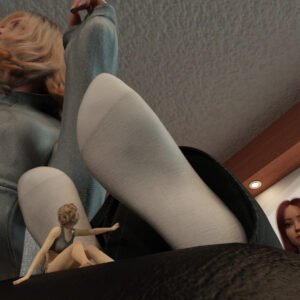
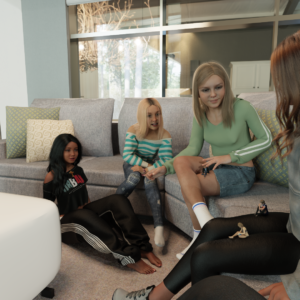
1) Ava looks pretty good in today’s picture!
2) If you change the word “Guardian” to “Government” this whole philosophy could be applied to the general population.
3) Once Cindy answers the question about the claim “a person trapped in a Little body” and then states that she still believes her answer. How can she continue with that claim?
4) I get the feeling that even if Cindy accepts her Little role, she won’t be getting pizza rolls anytime soon. Madison would see her as the poster child for Little behavior and would never grant her the exceptions that Greg receives.
5) If she wanted to be a little shit (pun intended), she could ruin things for Greg by letting Madison know that she is confused by the way Madison treats Greg and it is hindering her adjustment.
6) Seems like many Guardians are breaking the law by treating their Little as an equal.
7) No one noticed that Cindy had just typed out a legal declaration against her own personhood. – Did Cindy?
1) its not such a extreme close up which helps. She did turn out really well I think in general.
2) It would. But people don’t think about very often historically speaking or currently.
3) Cindy is answering the questions for correctness. She can still feel however she wants to feel. She also wouldnt be the first person to say one thing and then apply it differently themselves.
4) Cindy definately wont be getting pizza rolls. She is on a pellet based diet.
5) Madison would probably tell her that she wouldnt worry about how McKenzie treats her litlte as she belongs to her.
6) guardians can be nice and love their littles and not view htem as equal. I mean people love on their dogs and cats and other pets and but can still be separate.
7) She did layout every reason why seh wouldn’t be human but she also didnt admit to any of it in her case. As she views herself as a shrunken person and not a little. .
5) I was referring to Madison treating Greg differently. Her feeding him pizza rolls is not in scope.
A guardian can provide rewards and luxuries at their choosing. Madison is purposefully handling Greg in more of her own style and wants as she’s not honoring her mother with Greg.
Like anything people do make things their own and put there own tastes into things.
Just because tehy are learning things and things are rules or guidelines, or regulations, etc. Doesnt mean they have to follow everything to letter. Its like driving the speed limit may have 50 but some people are goign to go sixty.
At a job their maybe a you need to do this X way but Y way may be quicker or better for you. The x way maybe the rule but the Y way is what you do unless you need to do things by the book in that scenario.
People in this world are still indviduals. Its not like Madison is giving Greg Pizza Rolls on the daily. She felt like wanting to be nice and doing something sweet for him so she did.
I agree with your points, my premise was that if Cindy wanted to be a turd about it and ruin it for Greg.
So, I am confused, is Cindy the only one who believes this shit? I guess my problem is that every single character has treated her like they believe she deserves worse than every other little, as if they thought what she was teaching was immoral and it is punishment.
Like, in this chapter she writes about how the teachings say that littles should be rewarded when obedient, yet Madison, who I thought was supposed to be a believer in her bullshit, seems to always openly treat her with contempt and bullies her, even though she has been obedient.
Not one character liked her? Did she have any redeeming qualities or are we just going down the “Brash evil woman gets what’s coming to her” path. Idk, it seems weird that her family is treating her as if what she preached was some horrid doctrine and she deserves punishment, but then it is reiterated that the popular belief is what she was preaching.
She says she took pride in making her house safe for Madison and her friends, yet they all seem pretty stoked that Madison lost both of her parents, Madison included.
She is a giant piece of shit, but if we are to believe most people believe this bullshit, wouldn’t most characters that knew her be mourning that someone they cared about is gone. It seems her daughters both resented her and her husband was too much of a pussy to have any kind of difficult discussion with her.
I guess I just don’t understand why they are all so focused on trying to humiliate her if they all believe what she was saying to some degree.
I think the disconnect is that you are reading everything done to Cindy as punishment, when that is not really how Madison views it.
The characters are not treating Cindy worse because they secretly know her beliefs were evil and now want revenge. They are treating her as a Little.
That is the important distinction.
To Madison, Cindy is not being punished for what she believed. Cindy is being handled according to the same framework Cindy herself supported. Littles need structure. Littles need correction. Littles need food rules. Littles need chores. Littles need to be useful. Littles need to accept their guardian. That is the worldview Cindy helped normalize, and Madison is applying it to her.
That does not mean Madison is always kind. It does not mean Madison is handling Cindy perfectly. But Madison is not sitting there thinking, “I know Mom was morally wrong, so now I’m going to humiliate her as revenge.” Madison thinks she is honoring what her mother taught her about Littles.
That is different from Madison being some staunch ideological believer in every single thing Cindy ever said. Madison exists inside this world. She believes parts of what society, school, and Cindy taught her, but she is still her own person. We see that with Greg. Madison can be softer with Greg because Greg is different to her emotionally, and because Greg adjusts in a way Cindy does not.
Cindy gets treated differently because she is Cindy.
There is history there. There is resentment. There is irony. There is Madison trying to apply Cindy’s own beliefs back onto Cindy. But I do not think the family is looking at Cindy and saying, “She deserves worse than other Littles.” They are looking at her and saying, “She is a Little now, and this is how Littles are supposed to be treated.”
That is also why Cindy’s chapter matters. Cindy is not suddenly rejecting the whole system. She still believes most of it. Her issue is that she does not believe it should apply to her. She believes in the structure, the hierarchy, the food rules, the chores, the usefulness, the guardian logic. She just sees herself as different because she remembers being Cindy Wessen.
So I do not think the story is saying Cindy had no redeeming qualities or that everyone hated her. Cindy was a wife, a mother, and someone who cared about her home and her daughters. But she was also controlling, prideful, and deeply invested in a system that is now being used on her. Those things can all be true at the same time.
The tragedy is not that everyone secretly hated Cindy and now gets to punish her.
The tragedy is that Cindy helped build a worldview where this treatment is considered normal, and now the people around her are applying that worldview to her while believing they are doing what makes sense.
As Cindy’s issue isn’t that what is being done is wrong, to do a little. It’s that it shouldn’t be done to her because she’s not a little.
See this is what I mean. You say they aren’t treating her differently because they are punishing her, and then immediately say she is treated differently because she is Cindy and Maddy feels resentment.
A) It isn’t clear what she is resentful for, so it comes off as resentful towards Cindy’s beliefs, hence the confusion
B) If she is the only one being treated that way, because of who she is, that is punishing her. The “honor” thing makes no sense at all because if she wanted to honor her, she would be rewarded for obedience and Greg wouldn’t be treated differently. Hell, honoring her would mean not listening to her teachings at all because she taught that littles are always littles and therefore shouldn’t be considered humans and respected as such.
As is, it comes off as she hated her mom and is punishing her because she treats everyone else, littles included, with way more love, and treats her mom like a little punching bag for her and her mean girl friends. Or just her coming up with bullshit reasons to take her anger out on her little slave, which if she loved her mom, makes zero sense
Would the government be against a complete biological little book with their complete body being exposed and everything different about them zoned in on ?
They would have no reason to be against it by just the way you described it. They would only have an issue with it the book was pushing an agenda they would consider untrue. If your book was basically breaking down biologically every way a little is no different hten a person and discussing how they should be equal because of it.
they are probably going to have an issue with that.
If you’re book is like this how the lungs of a little work. The lungs work in this way beucase of the size difference, etc. etc. etc. They would have no issue with it.
They are centralized government but its not north korea either. They aren’t manipulating every aspect of life and disgusing every event. They are mostly just controlling the little narrative.
Although the government I would say is more centralized meaning there wasn’t regeans deregulation. So the governemnt has more control of the markets and things.
So the smallara government is a red tape, regulation nightmare like California or Europe and make it hard to get anything done, I guess that’s good for littles lol.