
Chapter 26
August 26, 2021
Juna wanted to know whether the painted sun belonged to her classroom. Callie had shown her the preschool photographs often enough that she recognized it before they reached the door, and now she stood beneath it with Gus pressed against her chest, waiting for confirmation. In the pictures, the sun had seemed a useful thing to point out while explaining where she would go. Here it was attached to a door Callie would eventually have to leave her on the other side of. She checked the room number against the email on her phone despite having already checked it from the pavement. Behind the glass, somebody was crouched beside a low shelf, moving a basket of wooden blocks within reach of a child. A small blue jacket hung from a row of pegs. Callie put the phone away before Juna could ask why they were still standing outside.
“This is it,” she said, opening the door. “We get to look around together today.” She guided Juna through ahead of her and found the folder slipping beneath her arm. There were so many things she wanted to ask that she had written them down, then removed several because asking whether the staff would notice if her daughter was unhappy did not seem likely to produce useful information. The room smelled of washable paint and something freshly wiped clean. Light fell across low tables, a rug patterned with roads, and a little kitchen whose cupboard doors had been opened and abandoned. Juna stopped just inside, studying the blocks. She had been discussing them since Minnesota. Now that they were available, she apparently required time to reconsider.
A woman came over and introduced herself as Ms. Rivera. She greeted Callie, then crouched far enough away that Juna could look at her without having to retreat behind Callie’s knees. “You must be Juna. I’m glad you came to visit.” Her attention moved to the stuffed dog. “And who’s this?”
“Gus.” Juna turned him around by one ear, letting the teacher inspect his face. “He’s purple.”
“I noticed. Does he want to see the room too?” Ms. Rivera waited while Juna nodded, then pointed toward the low shelves. “There are blocks over there, and some animals in the basket beside them. You and your mom can have a look.” She stood to speak to Callie without losing track of the child moving slowly toward the rug. “We’ll go over the forms once she’s had a chance to settle. You’re welcome to sit with her.”
Callie followed Juna and lowered herself to the rug, balancing the folder across her knees. Her daughter selected two blocks, pressed their edges together, and glanced back to make sure Callie remained where she had put her. Across the room, another parent was discussing pickup times while a boy attempted to fit a wooden truck inside the toy oven. The teacher beside him asked what he was cooking. Callie watched long enough to hear his answer before turning back to Juna’s construction. She had expected to study the exits, the staff, the shelves, all the things she could make into a list. Instead she found herself watching how readily the woman had entered the boy’s ridiculous problem. Nobody told him the truck did not belong there until he tried to shut the door on its wheels.
Juna put Gus beside the growing wall and reached into the basket for a plastic horse. A girl wearing yellow sandals came to stand on the other side of the blocks. She picked up a piece Juna had set aside, and Juna immediately drew it toward herself. Callie leaned forward, already forming the explanation about sharing, but Ms. Rivera had joined them. She asked which blocks Juna was using and helped the other girl find pieces for something beside it. Their two structures remained separate. After a minute the girl offered Juna a curved piece, apparently satisfied that there would be no dispute over its ownership. Callie sat back and slid the folder off her knees. She had not been needed, and she was trying to feel only pleased about it.
At the little table near the door, Ms. Rivera checked the emergency contacts and confirmed the introductory hours for the following week. Callie asked about meals, bathroom help, and what happened if Juna became upset after she left. The teacher answered without treating any of the questions as evidence that Callie should have figured it out already. There was a procedure, but there were also children who did not follow procedures, and staff who were expected to notice the difference. Callie found that she liked her better for saying so. The copy of Juna’s immunity result went behind the other records. Ms. Rivera checked the name and date, then turned to the permission forms with the same careful attention she had given everything else.
“We’ll keep the first goodbye simple,” she said. “Tell her you’re leaving and when you’ll be back. You can help her start an activity, but don’t slip out while she’s looking away. If we need you, we’ll call.” She paused while Callie wrote down something she already knew. “You can call us too. We understand that this is new for both of you.”
Callie capped the pen and looked toward the rug. Juna had given the girl in yellow sandals one of her animals. That seemed encouraging until Callie saw that she was directing precisely where it should stand. Her daughter had acquired a collaborator without relinquishing management. “She’s used to having family around,” Callie said. “My parents helped while I was in school. My sister too.” She heard the explanation gathering speed and stopped before it became a history of everyone who had ever watched Juna. “This is her first place like this.”
“Then we’ll get to know her.” Ms. Rivera closed the folder, leaving one page for Callie to take home. “And she’ll get to know us.” A child called from the little kitchen, and the teacher excused herself to investigate a problem involving two cups and only one pretend sink. Callie watched her go, then checked the introductory pickup time once more. Her first class ended comfortably before it. She had measured the walk on the campus visit yesterday, though Juna’s interest in a sprinkler had made the result less scientific than she wanted. She could do it again without a child stopping to supervise the landscaping. There was room in the morning. She kept trying to make that fact feel more definite than a number on paper.
Leaving proved harder than arriving. Juna wanted to finish the wall, then show Ms. Rivera the wall, then explain why Gus could not remain with the other animals. Callie gave her a few minutes and waited near the rug while another parent collected a bag. Outside, Maggie was due to meet them after her own orientation session. Callie had expected to emerge with a child who needed reassurance. Instead she was finally escorting one who wanted to know why the visit had to end. On the pavement, Juna carried Gus by the body rather than his ear and asked whether the blocks would still be there on Monday. Callie told her they would. She could not promise the exact pieces, or the girl in the yellow sandals, or that her daughter would feel the same way when visiting became staying, but for once the answer she could give was enough.
Maggie waved from beside a bench, a roll of papers sticking out of her bag. She had been sent away with a supply list longer than the one she had brought from home and instructions to start watching how people used everyday objects. By the time they reached the car, she was explaining an assignment involving handles. Juna contributed the opinion that the preschool kitchen’s oven handle was good because it opened. Maggie nodded accepting that as a positive review and asked what else she had liked. Callie listened to them discuss the blocks while she unlocked the RAV4. Her shoulders felt less tight than they had outside the painted sun. She wanted to call her mom, but she could wait until they were home and explain it without trying to fasten Juna’s seat belt at the same time.
August 30, 2021
The girl in yellow sandals was absent on Monday. Juna noticed before she had even taken her backpack off, and Callie watched the change in her face while Ms. Rivera showed her where to hang it. Gus was allowed to stay in her cubby. Putting him there required a negotiation that ended with his head facing outward, where he could watch the room. Callie helped Juna find the blocks, stayed while she chose two, and then said the words they had practiced at home. She would go to her own school now. She would come back after lunch. Juna looked up as though this part might still be revised if she paid sufficient attention.
“You stay,” she said, catching Callie’s sleeve. Her fingers tightened around the fabric when Callie crouched beside her. “Here.”
“I have to go to my classroom. Ms. Rivera will stay with you.” Callie kept her hand over Juna’s without trying to peel it away. She had imagined a brave, efficient goodbye and had even considered what to say if her daughter cried. None of those rehearsals had accounted for the ordinary warmth of the small hand holding her sleeve. “You can build something to show me when I come back. I want to see what you make.”
Ms. Rivera joined them and suggested finding the curved blocks Juna had liked during the visit. She waited until Juna released the sleeve, then remained beside her while Callie stood. Callie said goodbye again without adding another promise. At the door she looked back once. Juna was watching her, lower lip pushed forward, and the teacher was talking quietly while holding out two blocks to choose between. Callie made herself walk through. She stood in the corridor long enough to put the folder in her bag, then kept moving before checking through the glass could become the first of ten checks. Outside, she took her phone out and typed a message to Maggie saying the drop-off had happened. The wording looked oddly inadequate. She sent it anyway.
Campus was busier than it had been during their exploratory walk. Bicycles moved through gaps between people, doors opened onto voices, and someone beside the library was handing out flyers to students who already had things in both hands. Callie passed him without being given one. She had come early enough to reach the engineering building without hurrying, but her attention kept returning to the phone against her palm. No call. She put it in her bag, checked the building number, and followed a group through the entrance. Inside, the hall smelled faintly of coffee and warm electronics. Room numbers proceeded in a direction she understood until the corridor turned, at which point they appeared to change their minds. She found the right classroom with twelve minutes to spare and chose a seat that gave her a good view without committing her to the front row on the first day.
A woman near the lectern was connecting a cable to the presentation system. She wore jeans and a PPU shirt, with a lanyard tucked back so it would not catch while she worked. Callie assumed she was the instructor until she turned and addressed the small furnished case resting on the teaching table. Its top handle was folded down. A clear side showed a bed along one wall, a chair, and somebody standing beside a little desk. Callie stared before recognition caught up with what she was seeing. The man inside had a light-colored shirt with the sleeves rolled to his elbows. A collar rested at his neck. When the woman opened a door in the side of the case, he turned toward her and waited while she positioned a short walkway between his room and a raised teaching platform.
Callie glanced at the name printed on her timetable. Professor Oliver Frank. At the front, the woman lowered a microphone assembly beside the platform and adjusted a small tablet on its stand. The professor walked out carrying a few sheets of paper, crossed the supported walkway, and put them beside the tablet. He looked over the classroom while the woman checked something on the full-sized computer. Students were still coming in. A chair scraped hard against the floor, and he paused until the sound ended before speaking into the microphone.
“Good morning. Can you hear me at the back?” His voice came through the speakers with a little too much volume, clear enough to make Callie lower the pen she had just lifted. He listened to the replies, turned toward the woman, and grinned. “Excellent. Brenda, let’s bring it down before I become everyone’s first headache of the semester.”
She adjusted the level and gave him a small thumbs up. He tested it again with the same easy confidence, then introduced himself properly. His name appeared on the screen behind him, followed by Brenda Walsh’s. She was his teaching assistant and a student further along in the program, he explained, which meant she remembered surviving the course well enough to be useful to them. Callie had begun writing both names when Brenda folded her arms and looked down at him.
“I remember the marking,” she said. “You could mention that.”
“I was hoping you’d forgotten.” Oliver turned back to the class with a smile that seemed to include the students who had not yet decided whether they were allowed to laugh. “Brenda will run your lab sections and help with equipment. I teach the lectures, set the work, and remain available to be blamed for it. You’ll find our contact details and office hours on the course page. If something on there disagrees with something I say today, ask. It may be a mistake. Occasionally it will even be mine.”
Callie smiled and turned to a clean page. He went through the practical information without reading every word from the screen. Assignments had deadlines. Labs required preparation. Nobody was to connect equipment before checking what the equipment was supposed to do. He spoke warmly, but the last instruction came with a firmness that made her underline it. While he talked, Brenda moved the transport case farther from the table’s edge and secured the lead that powered its base. The professor continued without watching her. Callie could see the walkway remained in place, connecting the platform to his room. The little desk inside held papers and a narrow shelf. He could go back there himself, provided someone had first put the entire arrangement where it needed to be.
A student two rows ahead raised his hand and directed a question toward Brenda about whether the professor would be taking office hours in person. Brenda looked toward Oliver, who leaned closer to his microphone. “I will. Ask me, though. Miss Walsh already gets enough questions that ought to be mine.” He waited until the student met his gaze, then added, “Unless you’re asking whether I’m a generous marker. For that, I recommend an independent source.” There was a little laughter, and the student repeated the question to him with an embarrassed smile. Oliver answered it without prolonging the correction. Callie wrote the office location beside the hours. It was the same building. She liked knowing that before she needed it.
The next slide showed a circuit rather than a list of expectations. Oliver gave them a minute to examine it and asked what happened when the switch opened. Callie followed the drawn line from the source, across the upper branch, and through the switch. Her first answer seemed obvious until she noticed the second route. She traced that one with the tip of her pen above the page, reluctant to mark anything until she was sure. Around her, people were looking up and down between the screen and their notebooks. Oliver watched the room, giving them enough silence to discover that he was waiting for more than the first response somebody could produce.
“Everything turns off,” a student said eventually. He sounded less certain by the end of the sentence than he had at the beginning.
“Which part of the drawing makes you say that?” Oliver asked. There was no sharpness in it. He waited while the student described the broken connection, then used his tablet to highlight the branch on the screen. “That path is open. Agreed. What about the other one?” He let the question remain with them. Callie looked at the lower branch again, mentally separating what the switch affected from what she had assumed it affected. At home, she would have wanted to wire the thing and test it. Here she had to explain it first.
She raised her hand before she could spend another minute deciding whether she ought to. “The lower branch still has a complete path,” she said when he called on her. “Opening that switch doesn’t break this one.” She pointed at the screen, then felt foolish because he could not know exactly where her finger was aimed. “The branch below it.”
Oliver highlighted the line she meant. “This one?” He waited for her nod. “Good. And why does that matter?”
She explained, stopping once to choose a word more carefully. He asked another question that forced her to look back at the source rather than keep following the same piece of the drawing. Callie could feel other students listening. She had answered questions in school, argued with Jed over a component that did not behave as expected, and explained her project often enough to lose patience with her own explanations. None of that kept her from feeling her face warm now. Oliver gave her time. When she reached the point he wanted, he nodded and used her answer to continue the lesson, returning to the student who had answered first so they could examine the difference together.
Callie wrote fast enough that the last word ran into the margin. The next example changed one connection. She expected the answer to change in one way and discovered she had missed something again. Beside the lectern, Brenda brought up a demonstration board and connected it only after Oliver checked with her that the supply was off. Small lamps reproduced the paths on the slide. Brenda moved the switch while he talked them through it, her full sized hands doing the physical work his could not reach. When one lamp stayed dark unexpectedly, he stopped, asked her to check the connection beside it, and waited while she reseated the lead. The lamp came on. He thanked her and looked back toward the students.
“There. A useful distinction between a wrong idea and a loose wire.” He rested one hand on the edge of his tablet. “You will encounter both. Sometimes in the same afternoon. Please don’t spend forty minutes revising the laws of electricity before checking the connection.” His smile broadened as Brenda gave him a look. “Yes, that advice is based on experience. No, she is not authorized to give you the details.”
The laughter loosened something in the room. Callie found herself smiling while she redrew the circuit, this time leaving enough space to label it properly. She had stopped checking whether she ought to look at him and begun looking because he was speaking. His movements remained small against the equipment surrounding him, but the lecture kept drawing her attention to what he wanted them to consider. Once, when she opened her bag for a second pen, she saw her phone and checked the screen. Still no call. She put it away and returned to the example before she missed the next change. There would be a lab later in the week. She wanted to get her hands on the components badly enough that she reread the safety instructions when the session ended.
People gathered near Brenda to ask about lab sections. Callie packed slowly, checking that she had saved the course page, then approached the teaching table from the other side. Oliver was sorting his papers beside the tablet. Up close, she could see his expression more clearly and the way the collar lay against his shirt. She kept her bag against her hip so it would not swing into the table. He looked up before she had decided how loudly to introduce herself.
“The lower branch,” he said, smiling. “You have a name as well, I hope.”
“Callie Grey.” She leaned slightly closer, enough to hear him without the classroom speakers. His natural voice was much quieter, and somebody dragging a chair behind her swallowed the end of his reply. She waited until the noise stopped. “Sorry. I missed that.”
“I said, welcome, Callie Grey.” Oliver slid the papers into a folder. “That chair was determined to have the last word. What can I help you with?”
She asked about the difference between the lecture work and the lab preparation, then explained that she had done some projects at home but was not sure how much that would carry over. He asked what kind. Callie described the sensor and servo arrangement she had built for the automatic enclosure, keeping it brief until he asked about the linkage. Then she found herself drawing its movement with her fingers. He watched her hand, asked what had failed during testing, and laughed when she admitted how long she had spent trying to solve a problem that turned out to be the bracket.
“Excellent. You’re already acquainted with the bracket,” he said. “That puts you ahead of the people who believe everything unfortunate happens in software.” He pointed toward her notebook. “Bring a picture if you have one. I’d like to see what you did. And don’t skip the preparation because you’ve handled parts before. Good habits are much easier to build before you have to unlearn the entertaining ones.”
Brenda joined them with a coil of cable in her hand. She told Oliver the room needed clearing for the next session and began disconnecting the demonstration board. Callie stepped back to give her space, but Oliver finished explaining where to find the preparation sheet before gathering his things. He carried the folder across the walkway and into the habitat. Brenda waited until he was inside, then removed the bridge and latched the little door. When she lifted the case, she kept her other hand beneath its base. The careful movement looked familiar from training, though the room inside made the object much more personal than the practice equipment had been. Callie could see his jacket hanging near the bed.
“I’m taking him back to his office,” Brenda said, noticing Callie’s glance toward the corridor. “If you’re trying to find it, you can walk with us.” She collected her own bag and checked the handle before moving. “And if you need to change a lab section, ask me before you do it online. Some of the available spaces are more theoretical than the system admits.”
Callie followed her out, relieved to have someone explain the corridor rather than rely on the map that had already confused her once. Brenda had been in the program long enough to know which doors were usually locked and where people actually went when a notice sent them somewhere else. She pointed out the lab, then turned down a quieter hall toward the faculty offices. At Oliver’s door, she set the habitat on a broad, clear section of the desk, plugged it in, and restored the walkway to a small platform beside his computer. He came out while she checked his afternoon schedule. Callie stayed near the doorway until he invited her in. There were full sized bookshelves, framed photographs, and a whiteboard covered with handwriting that must have been made before he could no longer reach it, or by somebody following his directions. She did not know which and stopped herself from deciding.
“Is his Guardian here on campus?” she asked Brenda while Oliver was checking the computer. The question came from wondering how the day worked, but it sounded more intrusive once spoken. “Sorry. I mean, are you responsible for him all day?”
Brenda rested the cable she had been holding beside the computer. “I’m a Guardian, and I’m authorized to assist him here. But I’m his TA. His registered Guardian is his daughter, Alicia.” She spoke plainly, without making the distinction sound complicated. “She brings him in, I take over during teaching hours, and we arrange the handoff around her school schedule.”
“Volleyball schedule,” Oliver corrected from the platform. “The school schedule is merely one of its supporting departments.” He glanced toward a photograph on the desk, and Callie followed his attention. A tall girl in a team jersey stood beside a full sized man whose face she recognized after a moment as his. His arm rested around her shoulders. “I raised her on my own,” he added, returning to Callie. “She likes to point out that she now gets to fill in more of the forms.” His smile stayed easy, but he had set down the paper he was holding. “Some of those forms are considerably less amusing than she is.”
Callie looked back at him, uncertain what she was allowed to ask next. He saved her from choosing by returning to her project and telling her when she could bring the photographs. Brenda opened her own notebook, preparing to go over something with him, and Callie recognized that she had stayed long enough. She thanked them, put her notebook away, and left with the office number written where she could find it. In the corridor she checked her phone again. A message from the preschool said Juna had settled and was participating in the morning activities. There was no photograph, no evidence she could enlarge and inspect, just a few ordinary words. Callie read them twice before putting the phone away.
By pickup, Juna had produced a painting she described as a horse and eaten enough lunch that Ms. Rivera gave Callie a reassuring account of it before mentioning the difficult first few minutes. Juna came toward her quickly, then stopped to retrieve Gus as though remembering he had also completed a demanding morning. Callie hugged her while the teacher explained where the painting could dry. She wanted to ask every question at once, but Juna was already reporting that somebody had taken the blue cup and that the horse had legs Callie was apparently failing to appreciate. They left with the paper held flat between Callie’s hands. Outside, her daughter asked whether they were going to Mommy’s school now. Callie had planned a grocery stop. Instead she sat with her on the bench, gave her water, and checked the time of Oliver’s office hours.
They met Maggie near the student center. She had attended her first session, located a room she had been certain did not exist, and been assigned to draw the same object from several angles without improving it first. Callie listened while Juna ate crackers and supplied commentary on the horse. Maggie inspected the painting with appropriate attention before asking about circuits. When Callie mentioned Oliver, her friend put down the corner of the paper she had been holding and listened more closely. Callie described the lecture, Brenda, and the furnished habitat, finding that she wanted to tell her about the changed connection in the circuit as much as the professor’s size. Maggie asked whether she had understood it. Callie admitted that she had understood the first one and then immediately been made less comfortable by the second.
“Promising start,” Maggie said. She smiled and folded her timetable. “I have been told that my job is to stop deciding I know what something needs before I’ve watched anybody use it. Apparently I have a lot of opinions for someone who arrived last week.” She looked at Juna’s painting again. “Do you mind if I come with you? I want to see the engineering building. And I’m curious about the room inside that case.”
Callie had photographs of the enclosure on her phone already, and Oliver had invited her to bring them. She checked that Juna was willing to walk, then carried the painting while Maggie took her daughter’s free hand. The route felt shorter now that she knew it. At the engineering entrance, Juna asked about the blocks again. Maggie told her they would look for evidence. Callie found Oliver’s office without consulting the map, a small achievement she enjoyed more than it deserved. The door was open. Brenda sat beside the desk with her laptop, and Oliver was on the platform, considering something on the computer. He looked up when Callie knocked and smiled at the small group gathered in the doorway.
“You’ve brought colleagues.” He moved to the edge of the platform without coming close to the drop. “Come in. Who’s this?”
Callie introduced Maggie and Juna, then explained that she had the project photographs if this was still a good time. Oliver told her it was. Juna stayed against Callie’s leg, staring up at the desk. Callie lifted her onto her lap once she had sat, keeping her far enough back that she could not reach the platform without permission. Brenda turned the laptop slightly to make space for Callie’s phone, and they began looking through the pictures. Oliver asked about the sensor position. When Callie zoomed in to show him, he told her to put the phone on the stand beside his tablet so he could examine it at a useful angle. She had been about to hold it above him. She adjusted it instead, aware that she had nearly made him crane his neck for her convenience.
He found the bracket in the third picture and asked a question she had never considered about how it behaved after repeated movement. Callie explained what she had tested, then admitted what she had not. Brenda leaned forward to see the connection he meant. Maggie looked at the little habitat while the conversation moved into something she did not need to understand, and Juna watched Oliver with the grave concentration she usually reserved for animals doing unexpected things. When the professor finished his question, she leaned against Callie’s arm and asked whether that was his bed.
“It is,” Oliver said, following her gaze toward the case. “A very comfortable one. Much better than sleeping on a stack of assignments.” He looked at Callie. “Although I recommend finishing yours before testing that theory.”
Juna considered him, then pointed at the small desk. “You have school in there.”
“Sometimes.” Oliver rested a hand against his own tablet. “Mostly I try to keep school over here. It has a habit of following me home.” He asked whether she had started school too, and Juna gave him a detailed account of the blue cup. He listened without trying to turn it into a lesson, asking one question that prompted her to explain who had taken it. Callie looked down at the top of her daughter’s head and realized she had relaxed her grip on the painting. It lay safely across her bag. For a few minutes she had stopped calculating the next thing she needed to do.
A voice arrived from the corridor ahead of its owner, calling that the bus had been late and somebody had lost a shoe, not her, and she would explain in a second. Oliver closed his eyes briefly with an expression Callie recognized from Stuart when Hannah began a story in the middle. Then a tall girl appeared in the doorway, one strap of a volleyball bag caught on her shoulder and a backpack hanging from the other. Her hair was pulled into a ponytail that had partly escaped, and she was still moving when she noticed the visitors. She stopped with one foot inside, brightened, and shifted both bags as though they had suddenly become a problem she could solve by rearranging herself.
“Oh, hi. Sorry. I thought it was just Brenda.” Her attention passed over Callie and Maggie before catching on Juna. “Hi! Is that your dog? That’s so cute.” She looked toward the desk again without waiting for the answer. “Dad, practice got moved. We have to leave a little earlier, but Coach said you can sit in the office if the gym’s too loud. I told her you might want to finish marking, and then she said she has a quiet spot, but I haven’t seen it, so don’t yell at me if it’s a cupboard.”
“Alicia,” Oliver said, waiting until she looked at him. “Hello.”
She laughed, a quick, unembarrassed sound, and stepped farther inside. “Hi, Dad.” She put her bags against the wall, checking their position with a glance before continuing. Up close, she was taller than Callie had expected, all long legs and restless movement, her weight shifting from one foot to the other while she pushed loose hair behind her ear. “I did eat lunch. Before you ask. Brenda, did you get the charger back? Because I think the one in my bag is yours, but it could be ours. They all look exactly the same, which is stupid.”
Brenda reached into the bag beside her chair and produced another cable. “This is yours. I put a piece of green tape on it.” She exchanged it for the one Alicia offered, apparently familiar enough with the pace of her conversation to act before the subject moved again. “He’s been plugged in here. You’ve got plenty of charge for practice.”
Oliver introduced his daughter to them, and Alicia greeted each of them by name before asking Juna about the painting. She crouched to see it, her knees coming up awkwardly in the narrow space, and accepted the explanation that the purple shape was a horse. Callie could see the resemblance now that her daughter indicated its head. Alicia said she liked the color, then straightened and asked Oliver whether he was ready. The sudden quiet while she waited seemed almost deliberate. She had been filling the office since arriving, but she did not reach for the habitat’s handle until he answered.
“In a minute. Callie, bring the linkage drawing to the lab if you still have it,” he said, turning back to her. “I’d like you to look at it after we’ve done some of the measurement work. You may decide you were right. You may decide you were fortunate. Both are useful things to discover.” He smiled when she laughed, then saved what he had been working on and gathered his papers. Alicia pulled a folded list from the side pocket of her backpack and began checking it while he crossed into his room.
Maggie asked about the case once he was inside. Alicia’s face brightened again. “It’s his habitat. The whole thing comes with us. Bed, chair, desk, storage.” She pointed through the clear panel without tapping it. Callie could see a book laid beside the little chair, clothing tucked into a narrow compartment, and a photograph near the bed. There was no kitchen. The space looked like a small dorm room with everything fitted where it belonged. “The floor’s heated. Here, see the temperature? We check it before we leave. And the door, and the charge, and that nothing’s loose.” She bent to look through another side, still talking. “He has better heating than my bedroom, which he says is a privilege of advanced age.”
“I said experience,” Oliver called from inside. His voice was quieter without the microphone, but Alicia had leaned close enough to hear him and Callie was beside the desk. “You supplied the age.”
“Same general concept.” Alicia grinned, then paused while he put his folder away. She watched his hands through the panel until he had finished, checked the door latch, and looked at Brenda. Her energy had not disappeared. One heel kept lifting from the floor, and she was already glancing toward her bag, but her hands were steady. Brenda confirmed the handoff and disconnected the power lead, leaving the habitat running on its battery. Alicia folded the walkway away, put the cable in its compartment, and asked her father whether he had everything he wanted. He looked around his room before answering. Only then did she lift the case, one hand on the handle and the other supporting its base.
“And the history assignment?” Oliver asked as Alicia settled the volleyball bag onto her shoulder. He had positioned himself where he could see through the panel, his face turned toward her. “Are we still pretending that was due on Wednesday?”
“It is due on Wednesday. I showed you.” Alicia looked at Brenda as though seeking a witness, then remembered Brenda had not been present for the argument. “The other thing was today. I did that.” She glanced toward Callie and Maggie, smiling again. “He’s very passionate about deadlines.”
“I have a professional interest.” Oliver’s answer made Brenda laugh as she closed her laptop. Alicia rolled her eyes with the practiced ease of a daughter who had heard the joke before and still gave him the satisfaction of reacting. Callie gathered her things and lifted Juna down, making sure the small hands stayed away from the case as Alicia turned. They walked into the corridor together. The girl shortened her stride while talking to Juna about volleyball, keeping the habitat level beside her thigh. Its proportions were close to a tackle box Stuart might have carried from the garage, but Callie could see Oliver through its side, listening to his daughter explain something to her own child. He looked comfortable enough to interrupt when Alicia described the ball as soft. Apparently he had evidence to the contrary.
At the entrance they parted. Alicia had transport arranged to practice, and Brenda remained upstairs to finish work. Callie watched the girl adjust the bag strap before continuing down the path, the handle held securely in her long fingers. From where Callie stood, Oliver’s face was already too small to distinguish. His daughter was still talking, turning her head down briefly to listen between sentences. Callie had a sudden memory of the photograph on his desk, his arm around her shoulders when he had been taller. She knew so little about the time between that picture and this afternoon. The thought stayed with her while Juna reached for her hand and Maggie asked which way they were going.
“Home,” Callie said, looking down at the painting to make sure she had not bent it. “I need to put this somewhere flat before I ruin the horse.” She was hungry, her notebook contained a circuit she wanted to redraw, and her daughter was beginning to drag her feet. There were groceries to buy and a message to send Sally about the first proper morning. None of those things had stopped being necessary while she sat in Oliver’s office. She looked back toward the engineering doors, fixing the route in her mind, then turned with Maggie toward the car.
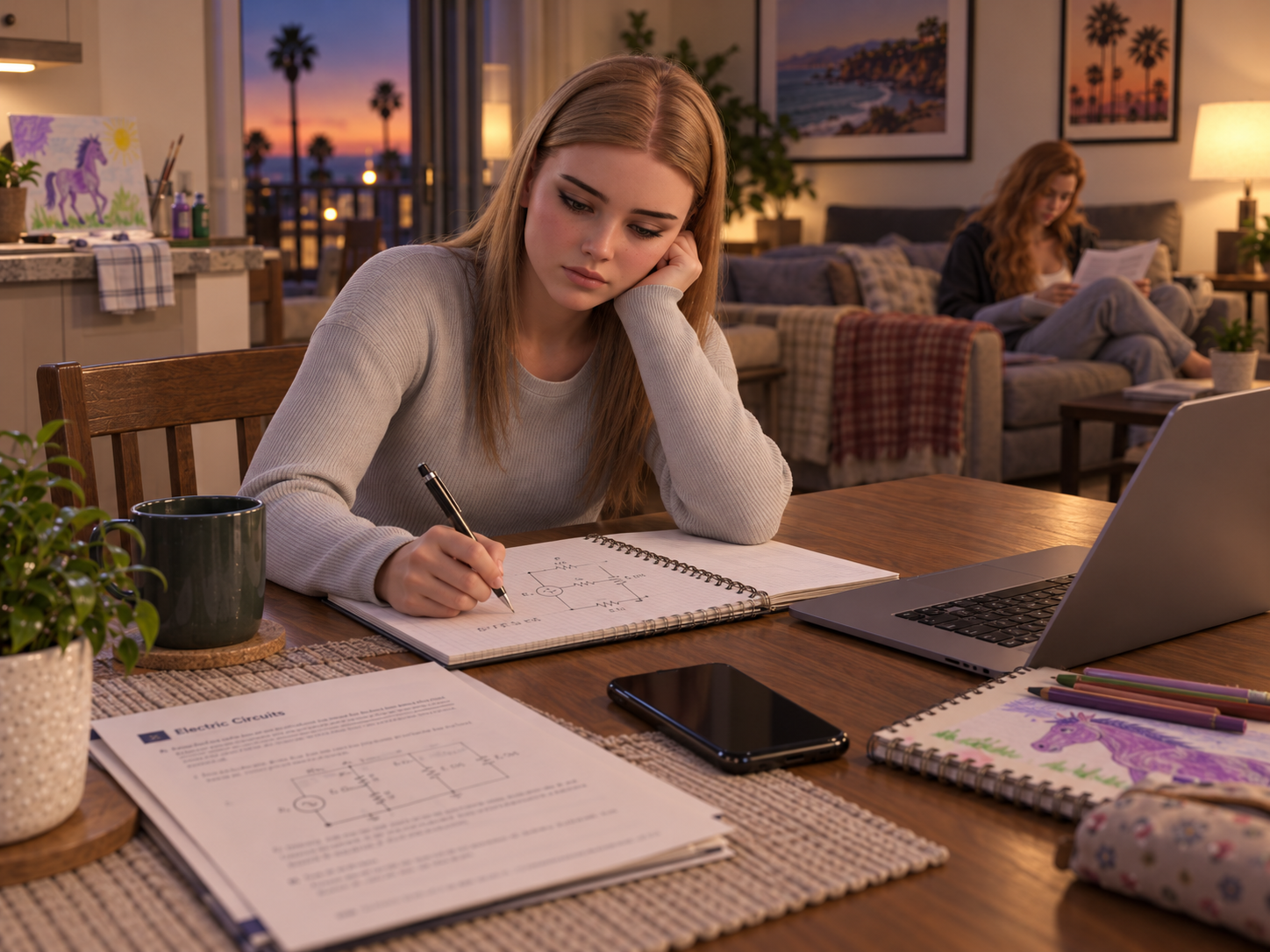
That evening, Juna’s horse dried on the kitchen counter beside Callie’s notebook. They had found a small secondhand table over the weekend, and Maggie had already claimed one corner for a drawing she was not ready to put away. Dinner left enough time for Callie to send the preschool report home before the bedtime negotiations began. Juna told Hannah that Mommy’s teacher had a bed he could carry, requiring Callie to explain that Alicia carried it and that the teacher’s name was Professor Frank. Hannah asked whether he was nice. Callie said he was, then found herself describing the lesson while Juna showed the horse to the camera again. Her sister listened until Callie began explaining the second branch, at which point she suggested that the horse deserved equal speaking time. Callie laughed and let Juna take over.
Later, with her daughter asleep and Maggie reading through an assignment in the other room, Callie sat at the table and opened the course page. The next preparation sheet was waiting. She read the first question, turned to her notebook, and drew the circuit again with straighter lines. In the margin she wrote down the question Oliver had asked about her linkage, leaving space beneath it for an answer she did not have yet. Outside, a door closed in the courtyard. She recognized the sound now without needing to get up and investigate. Her phone remained beside the page, where she could hear it, but for the next few minutes she left the screen dark and worked.

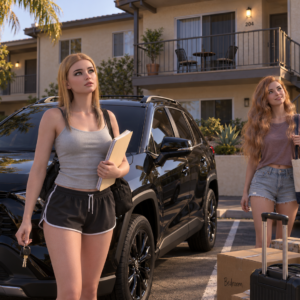
Alicia seems like a good character.
Alica isnt a very big character. she really just exists as Olivers daughter/guardian. So you only see them through callie in ways callie woudl interact with them.
She’s pretty big from Paul’s perspective 😝