

Chapter 31
February 10, 2022
Ryan lifted the book off his face and slid the bookmark between the pages before he lost his place. He had attempted to read the same paragraph three times, falling asleep before completing it each time. The paperback had warmed against his chest. He liked that about physical books, the weight of them, the slight resistance when he bent the cover back, the ability to find a passage because he remembered which side of the page it had been on. Digital books were convenient. He could carry a hundred without making his bag any heavier. He still preferred having one in his hand.
It was the same reason he liked going to the movies. Generiflix could give him more things to watch than he would ever finish, but it could not quite give him the seat, the sound, or a roomful of people laughing at something he had missed until their reaction caught him up. He had been meaning to ask Callie whether she wanted to go. His phone lay on the cushion beside him, close enough to reach without sitting up, and he looked at it for a moment before putting the book on the table.
Time had become something he counted differently. Before Smallara, putting something off meant he would do it later. Now he sometimes caught himself wondering how much later he actually had. People who were immune could worry about Smallara and still make plans with an assumption he no longer shared. Their tomorrow still belonged to them. His came with a question he could never answer.
The apartment was quiet except for the refrigerator cycling on in the kitchen and the muffled movement of somebody farther down the hall. Ryan sat up and rubbed a hand over his face. He had changed out of his work clothes after coming home, although changing mostly meant exchanging one pair of jeans for another and throwing his bookstore shirt over the back of a chair. There were still books in two boxes beside the finished bookcase, which made buying another paperback that afternoon difficult to defend. He had done it anyway. Employee discount. That was technically a financial argument.
He got up, carried his mug into the kitchen, and opened the refrigerator without having a particular reason to. Half a carton of eggs, milk, leftover pasta, sandwich meat, cheese, and a container of something he had cooked two nights ago that had looked better then. He closed the door and checked the cupboard instead. There was soup. Soup required almost no ambition, which made it the obvious winner.
His phone buzzed from the couch while he was opening the can.
Ryan left the opener attached and went back for it. The notification was from his bank rather than Callie. His bookstore pay had deposited. He opened the app, checked the amount, and closed it again. Rent had already gone out for the month. Utilities would come next week. He could buy groceries Saturday and still have more than enough left.
That mattered to him even though, financially, it did not have to matter at all.
There was money with his name attached to it that had nothing to do with shelving books, finding obscure mysteries for customers, or explaining that the store could order something if they did not have it. There had been money with his name attached to it since before he was old enough to understand what a trust was. His Stevens Telecommunications shares existed whether he looked at them or not. Statements arrived. Dividends appeared. Attorneys and accountants occasionally sent things requiring signatures. If he decided tomorrow that he wanted a larger apartment, a new car, expensive furniture, and enough bookshelves to cover every wall, none of those purchases would present a meaningful problem.
He liked this apartment.
It had one bedroom, a kitchen that was large enough as long as nobody opened the dishwasher while someone else was using the stove, and a living room where the couch faced the television because there were not many other reasonable arrangements. The bookcase fit once he accounted for the skirting board. His neighbors borrowed things. He carried his own groceries. He went to work because the schedule said he was supposed to go to work, and when his paycheck arrived he knew exactly what he had done to earn it.
That had been the point when he left New York.
Not poverty. Ryan had never pretended to be poor, at least not to himself. Refusing to use family money would not make the money disappear, and performing hardship for the moral satisfaction of it struck him as insulting to people who had no choice in the matter. He used the trust when something genuinely required it. He kept the shares because selling them purely to make a statement would still mean allowing Stevens Telecommunications to determine his decisions. He just did not want either one to be the answer to the question of what he did with his life.
For most of his childhood, other people had already seemed to know.
Stevens Telecommunications was spoken about in his family with the sort of familiarity other families might use for a grocery store or church. There were names Ryan had heard at dinner long before he understood they belonged to executives. There were buildings he had visited because his father needed to stop by, company events where adults shook Ryan’s hand and told him how tall he had gotten, and conversations about the future that treated his participation as less a decision than a stage of development. Finish school. Learn the business. Find where he fit.
The strange part was that he had not hated any of it.
That would have made leaving easier to explain.
He had loved his parents. He had loved Charity, even during the years when her primary contribution to his life seemed to be stealing chargers and insisting his taste in music proved something had gone medically wrong with him. He had not believed Stevens Telecommunications was evil, and he had never developed the righteous conviction that wealth itself had corrupted everyone around him. He simply could not picture spending forty years occupying a place prepared for him before he had decided whether he wanted it.
At some point, being Ryan Stevens had started feeling too much like a job description.
So he left.
At first he told himself it was temporary. He would travel for a while, work somewhere nobody cared about his surname, decide what he liked when nobody had arranged the choices in advance. Then a few months became longer. He took ordinary jobs because ordinary jobs required him to show up and be competent at something without anyone lowering the bar because they knew his family. He learned which apartments photographed larger than they actually were. He learned that laundromat dryers could consume quarters without producing heat. He learned not to shop for groceries while hungry and that he absolutely would buy a book instead of going to the library if he told himself he was only going inside to look.
He called home, less often than he should have. He answered messages, eventually. Charity complained that he was impossible to reach while simultaneously ignoring his calls whenever she was doing something more interesting, which appeared to include almost everything.
There had been arguments. Nothing dramatic enough to justify what came later. His father thought Ryan was wasting time. Ryan thought his father had confused wasting time with not using it the way he wanted. His mother tried to occupy the space between them until that irritated both of them. Charity mostly wanted everyone to stop having the same argument because she had heard it already.
Ryan had believed there would be time for the argument to become boring.
That was one of the things Smallara had taken before it ever touched him.
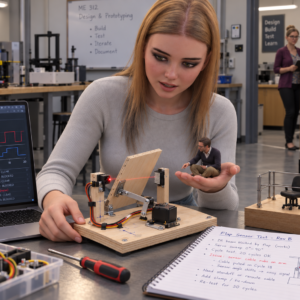
He returned to the kitchen, finished opening the soup, and poured it into a bowl. The microwave hummed while he leaned against the counter and looked toward the living room. His phone remained on the couch. Callie’s last message was still there if he wanted to open it again, the photograph of her notebook with the clamp she intended to make for the project. He had understood perhaps sixty percent of her explanation over coffee and considerably less after she started describing why the cable moving the sensor mount mattered, but he liked the way she talked when she forgot to check whether someone else was still following.
He had told her he wanted a demonstration.
He did.
The microwave beeped. Ryan took the bowl out, burned two fingers against the side, put it down too quickly, and decided that inheriting telecommunications money apparently did not include immunity to bowls becoming hot.
He ate at the small table beside the kitchen, where one unopened envelope from Stevens Telecommunications had been sitting for four days. It was probably another shareholder notice. He turned it over, read the return address, and left it closed. He would deal with it before the deadline. He always did. Ignoring the company completely would have required more effort than simply handling the occasional paperwork.
There were other things he had not been able to handle with paperwork.
He had sent Charity a stupid meme. He could still remember choosing it because he knew exactly how she would respond. Loser, probably. Stinkface if she was feeling particularly mature. An eye roll if she could not be bothered to type. He had checked his phone expecting one of those things and found nothing. Then he had checked again.
There had been no particular reason to panic over an unanswered message. Charity ignored people when she wanted to. He had told himself that until he learned she had become a Little.
He had been somewhere near Texas when he found out. He drove back to New York, covering roads he barely remembered afterward, and arrived at a house he had stayed away from for too long. His parents had already been infected long before that. Charity was gone.
The house had not looked abandoned. That was what he remembered most clearly. There were dishes. Furniture. Mail. One of Charity’s sweatshirts had been hanging over the back of a chair as though she might come downstairs and complain if somebody moved it. Smallara could erase a person from a room without disturbing enough of the room to make their absence make sense.
Ryan spent two days looking through every room. He got down on the floor to check beneath furniture and examined gaps and corners he had never noticed when he lived there. Every room seemed to contain another place a six-inch person might have reached, another reason to search for an hour before admitting he had found nothing. He checked behind appliances. He removed drawers and looked into the spaces beneath them. He moved furniture away from walls and ran a flashlight beneath cabinets. At night he would remember somewhere he had not checked properly, get out of bed, and start again.
He never found her.
He didn’t know where she was, who she was with, or whether she had anyone looking after her. His parents were at least with family, even if Ryan had his opinions about how quickly some of that family had discovered an interest in them once money and property became involved. Charity was different. She could be anywhere.
He had searched what he could. Registries, reports, anything online that might have given him a name or a location. None of it had produced his sister. He had kept searching after he left New York again, at first daily and then less often because there were only so many times he could enter the same names and find the same nothing. Every few weeks he returned to it. Then every month. He kept copies of old information because systems changed, records moved, and something useless once might matter later. When a new database appeared, he checked it. When laws changed, he read enough to understand whether they gave him another way to ask.
Money could buy help. He had used it.
That had been one of the few times Ryan had not cared whether the money felt earned. If somebody claimed they could locate records, track transfers, or find a trail he had missed, he paid them to try. He had learned quickly that money could purchase effort without purchasing an answer. Some searches ended with nothing. Others ended with records that belonged to a different Charity Stevens. Once he had spent most of an afternoon staring at a result that matched closely enough to make his hands shake before a birth date proved it was somebody else.
Afterward he had sat in his car for nearly an hour before driving home.
The searches continued. Just not every day.
He could not live every day as the day Charity might be found. He had tried. It had turned each unknown number into a physical reaction and every email notification into something he had to open immediately. Eventually he understood that if information existed, he could still receive it while standing behind a bookstore register or making dinner or sleeping through the same paragraph three times.
Knowing that had not made him care less about her.
It had only made functioning possible.
Ryan rinsed the empty soup bowl and put it in the dishwasher. For a moment he stood with one hand against the counter, looking through the dark kitchen window at his own reflection. At twenty-one, he looked enough like himself that the sight should have been reassuring. Same height. Same hands. Same face that required shaving whether he felt like doing it or not.
None of that meant much.
His mother had once been full sized too. So had his father. So had Charity.
Ryan rested his head against the cabinet above the counter and closed his eyes.
Even finding Charity would not make him capable of rescuing her. That was the part he tried not to follow too far. He had money. He had lawyers if he needed them. He could cross the country in a day if somebody gave him an address.
None of those things changed what Smallara had already taught him about himself.
He was a Little.
He just hadn’t transformed yet.
Maybe it would happen next year. Maybe ten years from now. Maybe he would get lucky long enough to become stupid enough to believe he had escaped it. His mother had transformed. His father had transformed. Charity had transformed. Ryan had stopped treating his place at the end of that list as a question of if.
There were people who disliked the way he talked about it. He had learned that quickly enough to stop talking about it around most of them. They heard fatalism where he heard probability. They wanted him to say that nobody knew for certain, that treatments were improving, that Generitech was working on things, that three members of the same immediate family transforming did not mathematically guarantee the fourth would. Tests can be wrong. All of that could be true. It did not change what Ryan expected.
He did not spend his days waiting for symptoms. Most days he barely thought about them. He went to work. He recommended books. He bought groceries. He watched movies. He argued internally about whether buying another paperback while two boxes remained unpacked constituted a problem. He slept, ate, drove, paid bills, forgot laundry in the dryer, and occasionally had to look up how long chicken could safely remain in the refrigerator.
He had a life.
He just had trouble thinking of it as permanent.
Smallara did not frighten him only because he would become a few inches tall. The size was easy for people to understand because it was visible. They saw Littles standing in somebody’s hand and imagined furniture becoming enormous, doors becoming inaccessible, a drinking glass becoming something a person could drown in. Ryan imagined those things too. He had searched enough after Charity disappeared to understand them better than he wanted.
What stayed with him was everything that happened after.
His parents had not merely become smaller versions of themselves. The world had changed what it allowed them to be. Decisions that had belonged to them moved into other hands. Property, money, travel, housing, medical care, where they lived, who could speak for them. His father had spent a lifetime sitting in rooms where his opinion could redirect millions of dollars. Smallara had reduced him to a person whose own legal authority could be redirected by somebody else.
Ryan’s wealth would not protect him from that.
That knowledge had been surprisingly useful.
He did not need to save for retirement with the same anxiety some people carried. He did it anyway. He did not need the largest apartment he could afford, because ownership of more things would not make those things more secure. He did not chase advancement for the sake of accumulating a life impressive enough to lose. He worked at the bookstore because he liked books, liked people in manageable quantities, and liked finishing a day knowing what he had actually done.
The problem was that he had used the same reasoning on people.
Things were easier not to lose when you never fully claimed them in the first place.
Ryan returned to the couch and sat down. His book remained where he had left it, the cover bent slightly upward from his thumb. He straightened it and checked the time. A little after eight.
The apartment nearby had become quieter. Earlier, when he came home, Juna had been explaining something loudly enough that Ryan heard several disconnected words before Callie told her she needed to lower her voice. Rabbit. Glue. Maggie said. No, Mommy. Then the door closed and the rest disappeared.
He knew the sound of Juna running through the hallway before he saw her now. Not because he had made a point of learning it. There were simply differences between adult footsteps and a three year old moving as though every trip between two doors had become a competitive event. Sometimes Gus appeared under her arm. Sometimes she was carrying a picture. Once she had stopped him on his way downstairs to tell him her hat was wet and then looked at him as though he ought to understand why that information required immediate attention.
Ryan had thought about the wet hat at work later.
Not because it mattered. That was the strange part.
Callie had started entering his thoughts in the same way. He would see a book and wonder whether she had read it. A customer would describe a ridiculous technical problem with absolute confidence, and Ryan would think Callie would have an opinion about that. He passed the bakery where he had bought the bread for dinner and remembered her standing at the sink while Juna corrected his monster voice.
He had liked dinner more than he expected to.
Not because Callie had done anything designed to impress him. The chicken had been chicken. Maggie had cardboard spread over part of the room for a project. Juna had removed the center of her bread and left the crust like evidence. Callie had carried plates to the sink while continuing a conversation over her shoulder, and at some point Ryan had realized he was no longer behaving like a guest who needed to make sure he occupied the correct amount of space.
He had simply been there.
That was dangerous in a way he was not accustomed to thinking about danger.
The money did not matter. He could lose access to it and survive emotionally. Stevens Telecommunications did not matter in the way it once might have. His apartment could be emptied in an afternoon. His books could belong to somebody else. Even the independence he valued so much had always existed with an expiration date in the back of his mind.
Callie and Juna were becoming harder to put in that category.
He picked up his phone and opened their message thread.
Most of it was ordinary. A photograph of the clamp drawing. Ryan asking whether the project had cooperated. Callie telling him they had found the problem. Earlier messages about coffee, a joke about the mystery novel, and confirmation that Juna’s monster was not a cat despite what any reasonable person might conclude from the drawing.
He scrolled farther than necessary.
There were not many messages yet. That was somehow worse.
For a long time, that had made wanting things seem pointless.
Callie was becoming a problem with that.
She lived a few doors down. He knew the sound of Juna running through the hallway before he saw her. He knew which evenings Callie came home tired enough to stand at her door searching through the wrong pocket for her keys. He knew he liked talking to her when neither of them had anywhere particular to be. Lately he had started noticing things he wanted to tell her while they were happening instead of remembering them afterward.
He had noticed other things too.
Callie listened with her whole attention when she was interested, then interrupted when the thought arrived faster than courtesy. She apologized afterward about half the time. She planned everything and still managed to leave Juna’s spare socks in her backpack. She was careful with money without acting embarrassed about it. She could spend ten minutes explaining why a fictional locked door annoyed her, then forget that most people did not consider the internal logic of a mystery novel a matter requiring evidence.
She was pretty. Ryan had noticed that immediately and then tried to treat the observation as irrelevant.
It had not remained irrelevant.
He liked her hair when she had been too busy to do much with it. He liked the concentrated little crease that appeared between her eyebrows when she was trying to understand something. He liked when she smiled before she meant to, especially when she had been pretending to be annoyed. He liked that being somebody’s mother had not consumed every other part of her. Callie could remind Juna to use a napkin, discuss an electrical problem, insult Ryan’s ability to identify imaginary animals, and check the time for preschool pickup without seeming to think those things belonged to different versions of herself.
Ryan knew enough about Callie’s life to understand that liking her did not mean liking only her.
Juna was not a scheduling inconvenience attached to Callie. She was there. She needed lunch and baths and books and preschool and somebody to answer questions whose urgency bore little relationship to their actual importance. She interrupted conversations. She changed plans. She had opinions about bread crusts. If Ryan wanted Callie in his life, Juna would be in it too.
The thought should probably have made the whole thing feel more complicated.
Instead, Ryan had caught himself checking the children’s section when new used books came in.
He had put aside one about a dog three days ago before remembering he had absolutely no reason to be setting aside books for another person’s child. It was still beneath the counter with his name on a sticky note.
He looked toward his bookcase and laughed quietly at himself.
This was precisely how people acquired things to lose.
Ryan knew that.
He also knew what the alternative looked like because he had been practicing it for years.
Do not commit too strongly to a place because you might have to leave it. Do not build your identity around work because you might lose the ability to do it. Do not rely too heavily on money because the legal system could hand control of it to someone else. Do not make plans so far ahead that Smallara could turn them into reminders of everything you no longer had.
Reasonable rules, individually.
Together, they had a way of turning years into something closer to a waiting room.
Ryan did not think of himself as unhappy. That was the frustrating part. There were people who would have looked at his life and tried to diagnose sadness into it because the alternative was accepting that someone could function perfectly well while expecting his future to collapse. He laughed. He enjoyed work. He bought stupid things occasionally. He had favorite restaurants. He had opinions about movies nobody had asked for.
He wasn’t waiting to die.
He was waiting to stop being allowed to live the way he did now.
There was a difference.
His phone dimmed in his hand. Ryan touched the screen before it locked and returned to Callie’s latest message. She had sent the photograph of the clamp with an explanation beneath it. He enlarged the picture even though he still did not understand all of the labels.
The project meant something to her. That was enough.
The professor asking her to show it at the upcoming student showcase clearly meant something too, despite the way she had presented it as one more scheduling problem she needed to solve around preschool. Ryan had recognized the pride beneath the practical questions because he was beginning to recognize things about her.
He wanted to go if visitors were allowed.
The realization arrived so naturally that he nearly missed what was different about it.
He was thinking about spring.
Not abstractly. Not as a season that would probably occur whether he participated or not. He was picturing a specific afternoon months from now, Callie standing beside the project she had spent evenings troubleshooting, probably explaining the mechanism too quickly while Juna tried to touch something she was not supposed to touch.
Ryan wanted to be there.
He set the phone against his knee.
That was all.
It also wasn’t.
For years, the easiest way to deal with the future had been to keep it vague. Tomorrow was manageable. Next week was usually fine. Anything farther away became hypothetical enough that he could avoid investing too much emotion in it. If Smallara arrived, he would deal with what remained. If it did not, he could keep going.
Callie was quietly making vague time inconvenient.
Monday had become coffee.
Tomorrow could become a movie.
Spring might become a student project afternoon.
Ryan did not know what came after any of that.
He did not know whether Callie wanted this to become anything beyond a neighbor she enjoyed talking to. The dinner had included Maggie and Juna. Coffee had been just the two of them, but people were allowed to drink coffee without creating a relationship status. She had asked him to coffee, though. He had replayed that part enough times that pretending otherwise would have been embarrassing.
He could ask.
If she said no, he would survive an awkward hallway.
If she said yes, they would go to a movie.
It did not have to mean more tonight than that.
Ryan opened Generiflix out of habit, stared at the recommendations, then closed it and searched the local theater listings instead. There were three movies starting at reasonable times Friday. One looked terrible. One might be good. The third had apparently been constructed entirely from explosions and a very expensive actor staring grimly at things.
He could ask what she wanted to see after she said yes.
If she said yes.
Ryan rested the phone against his chest, looked up at the ceiling, and tried to identify when this had become difficult. He had left New York. He had driven halfway across the country alone. He had entered his family’s empty house after learning what happened. He had spent years carrying the knowledge that Smallara could take his independence whenever it felt like arriving.
Sending six words to a woman who lived a few doors away should not rank particularly high on the list of frightening decisions.
Unfortunately, fear was rarely organized by objective importance.
For the first time in a while, wanting something did not feel quite as stupid as waiting for the inevitable.
Ryan reached for his phone.
He opened Callie’s messages, stared at the empty field for a few seconds, and typed.
Movies Friday?
He looked at it once, decided adding anything else would make it worse, and sent it.

Love this look into Ryan.
This will be interesting! Callie will become Ryan’s guardian but also she’s falling for him as he is to her!
I think they would make a great little human relationship. Sh could make things for him & other littles with his money