
BECOMING GREY
Chapter 36.5
April 2026, Later That Evening
Outside the engineering building, the afternoon had settled into one of those pleasantly warm California evenings that still occasionally surprised Callie. The air smelled faintly of salt, and the wind carried the sounds of students crossing the courtyard toward the parking areas. Someone was sitting on the low wall outside the engineering department, eating from a takeout container while arguing with a friend about an upcoming exam. A group of undergraduates hurried past carrying what appeared to be pieces of a dismantled robot. Callie recognized the slightly frantic expressions on their faces. She had worn them often enough during her own undergraduate years.
She had been at Pacifica Polytechnic University long enough that she no longer compared every April day with Minnesota, although she suspected Hannah would consider that a personal betrayal. Her phone showed another message from Ryan, this time reporting that the cardboard habitat had survived relocation to the dining table. A second photograph showed considerably more tape than the first.
Structural integrity remains questionable, he had written. Management is optimistic.
Callie smiled and typed a response as she approached the parking lot.
Tell management her engineering consultant is on the way.
She tucked the phone into her bag and continued toward the car. She had promised herself she would not spend the evening mentally redesigning the monitoring controller, but the session kept returning to her attention. Nathan’s concern about the deadline was legitimate, and Shah’s questions about the proposed follow-up had exposed several things Callie needed to consider before the next review. None of those problems were going to become easier simply because she had identified them.
Still, she had left the laboratory with a clearer understanding of what needed investigating than she had possessed when she arrived. That was progress, even if it had taken most of the afternoon for her to appreciate it.
By the time she reached their apartment, she was ready to stop thinking about the controller for a little while.
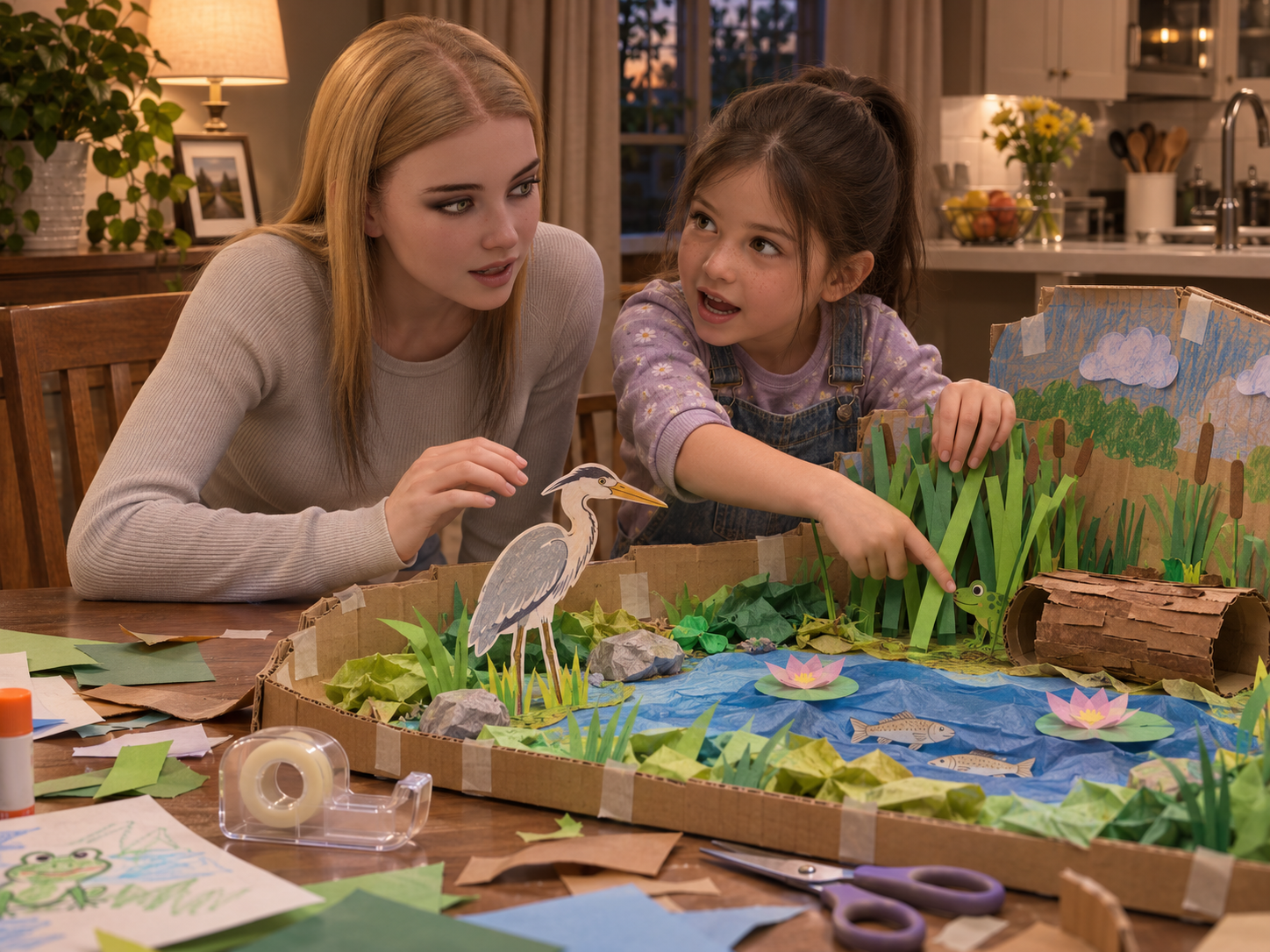
Ryan opened the door before Callie managed to get her keys out of the side pocket of her bag. He was wearing a faded T-shirt and jeans, with a narrow strip of green construction paper stuck to one sleeve. Behind him, the dining table had disappeared beneath an impressive collection of cardboard, paper scraps, glue sticks, and wooden craft sticks. Juna stood on a chair beside the project, arguing with a roll of tape that had attached itself to her fingers.
“Welcome home,” Ryan said. “Before you ask, the table is still under there.”
“I was going to ask whether the county had issued a building permit.”
“Apparently the permit department has been replaced by a seven-year-old who rejects most applications.”
Callie leaned forward to kiss him, smiling when he slipped his free hand around her waist and pulled her a little closer. He kissed her again before letting her go, then glanced toward the dining room as Juna called his name.
“Ryan! You’re supposed to hold this!”
“I was holding it. Your mother came home.”
“Well, you can come back!”
“See what I mean?” he murmured to Callie. “Very demanding management.”
“Sounds like you need a union.”
“I’ve been considering one.”
Callie slipped off her shoes and hung her bag near the door. Ryan took her jacket while she went to investigate the project. The model was even larger than the photograph suggested. Juna had constructed a freshwater wetland with blue paper representing the pond, clusters of green reeds, a cardboard log, and several animals made from folded paper. A heron stood near one edge, supported by a wooden stick. Two frogs occupied the bank, and a collection of small fish had been drawn beneath the paper water. Something resembling a dragonfly hovered above one corner on a piece of wire.
“Mom! Look!” Juna spread her arms over the project, nearly knocking over the heron in the process. “We have the water and the plants and the animals, and Ryan helped make the back, but he isn’t allowed to do the grass part because that’s yours.”
Callie leaned closer to examine the habitat. “That is a very large wetland.”
“It’s supposed to be a habitat. We have to show where everything lives and what it eats.” Juna pointed to a frog, then the heron, then the reeds. “The bird eats fish, and the frogs eat bugs, and the plants need the water. We need three animals, but I did more because there are more than three animals in a real wetland.”
“That’s generally true.”
Ryan returned to the table and picked up the corner he had apparently been ordered to hold. “The original plan was to use a shoebox. Then somebody decided the heron needed more room.”
“He does,” Juna insisted. “He’s tall.”
“Clearly. I suggested making him shorter. Apparently that was cruel.”
Callie studied the paper bird, which was approximately twice the height of the frogs and had a disproportionately large beak. “I think he’s a very respectable heron.”
“Thank you.” Juna looked pleased. “Ryan said he looks like he’s mad.”
“He does look a little mad,” Callie admitted.
“He’s looking for fish.”
“Then that explains it.”
Ryan gave her a grateful look when Juna turned away to inspect the reeds. Callie could see how much of the project had been assembled with his help, but the uneven coloring, crooked pieces, and generous use of tape remained unmistakably Juna’s work. He had resisted the temptation to make it look like an adult’s model. She appreciated that, especially since he had probably spent the afternoon watching Juna reject improvements that would have made the whole thing considerably easier to assemble.
Juna picked up a small paper fish and examined it critically. “I think we need more fish.”
“I thought we finished the fish,” Ryan said.
“We finished those fish. But the heron needs fish to eat, and then the other fish need to still be there.”
Callie looked at the collection already scattered beneath the blue paper. “How many fish does he eat?”
“I don’t know. He’s a heron.”
“That’s a convincing argument,” Ryan muttered.
Juna ignored him and began looking through the scraps for another piece of blue construction paper. Callie could see that this project was probably going to become one of those things Juna remembered with considerably more fondness than the adults involved in assembling it. There had been an era when a school assignment meant helping her daughter recognize letters, practice counting, or color something without covering the kitchen table in crayon. Now Juna had opinions about food chains, animal behavior, and whether the requirements on an assignment sheet were minimums or recommendations.
“How’d the lab go?” Ryan asked while she examined a partially finished section of the bank.
Callie rested her hands on the back of a chair. “The prototype worked.”
“That sounds promising.”
“And our participant accidentally canceled her measurement because she couldn’t tell it had started.”
Ryan considered the answer. “Okay. Less promising.”
“The control registered exactly the way it should. But the confirmation wasn’t obvious from where she was standing, so she pressed it again.” Callie gestured toward the cardboard model. “It’s sort of like putting a switch behind that log and expecting somebody to know it’s on because there’s a light on top.”
“Except they can’t see the light.”
“Exactly.”
Ryan looked at her for a moment. He knew enough about her projects by now to distinguish a problem she was excited to solve from one she was still annoyed about having discovered. “So can you fix it?”
“We think so. We have a few things to investigate first. I have to lead the next design review, which is exciting, except I was hoping we’d be wrapping this up instead of making another revision.”
“Right.” He glanced toward the project spread across their table, then back at her. “But you found it while you can still change it?”
“Yeah.” Callie nodded. “That’s the good part.”
He smiled. “You don’t sound thrilled about the good part.”
“I wasn’t, at first.” She stepped closer, slipping an arm around his waist while he kept one hand against the cardboard wall. “I spent a week making sure everything responded correctly, and then the first actual participant discovered something we hadn’t accounted for. I even had to rewrite the session summary because my first version made the result sound better than it was.”
“Was the first version wrong?”
“Not exactly. Just incomplete in a very convenient way.”
“Ah.” Ryan brushed his thumb against her side. “One of those.”
“One of those.” Callie leaned against him briefly before stepping back. “But that’s why we test things. Better to discover it now.”
“Then I’d call today productive.”
“I would too. Now.” She looked toward Juna, who had begun measuring a strip of green paper against the cardboard bank. “How’s the construction project?”
Ryan regarded the table with an expression of exhausted professional dignity. “We’ve reached the stage where the architect is issuing contradictory instructions and blaming the contractor.”
“That’s because you keep moving my stuff,” Juna said without looking up.
“I moved the scissors.”
“They were there for a reason.”
“They were in the glue.”
“That’s where I was working!”
Callie took the scissors away from the glue stick before the argument could expand. She remembered similar disputes with her father over projects spread across the kitchen table. Stuart had once told her that the difference between a hobby and a household emergency was whether someone could still find a place to eat dinner. Looking at Juna’s wetland, she suspected they had crossed that boundary sometime before Ryan sent the first photograph.
“Okay,” Callie said, setting the scissors beside the remaining construction paper. “Before we accidentally glue somebody to the table, how much of this is supposed to be finished tonight?”
“All of it,” Juna answered.
Ryan looked toward the ceiling.
“Juna.”
“What? It’s due Friday.”
“It’s Tuesday,” Ryan reminded her.
“I know. But I want it done.”
Callie understood that impulse considerably better than she cared to admit. Having a project finished early meant not worrying about it, and Juna had clearly decided that her wetland would occupy whatever amount of time she considered necessary. The problem was that her daughter had also developed the unfortunate tendency to improve things that were already finished, which made determining when a project was actually complete somewhat complicated.
“We can finish the grass tonight,” Callie said. “Then tomorrow you can check everything against the instructions. That way, if something needs fixing, you’ll still have time.”
Juna considered the proposal. “Can we do the labels too?”
“If we have time.”
“Okay.” She reached for another strip of construction paper, then hesitated. “But Ryan isn’t doing the grass.”
“Message received,” Ryan said.
They spent the next half hour making enough progress to satisfy Juna without completing the portion she had reserved for Callie. Ryan had prepared dinner earlier, and they moved the model onto a cleared section of the counter before eating. Juna explained the rules for her school presentation between bites, occasionally correcting Ryan when he remembered a requirement differently. Callie listened to the debate over whether the teacher had specified three animals or at least three animals, eventually asking to see the instruction sheet. Juna produced it from beneath a stack of paper, and Ryan accepted the ruling when it confirmed that additional animals were permitted.
“I told you,” Juna said.
“You did,” he agreed. “I formally withdraw my objection.”
“Good.”
“Does the heron have a name?”
“No. He’s a heron.”
“My mistake.”
Callie laughed into her water glass. Four years together had given Ryan and Juna an entire collection of routines that no longer required her participation. He knew which foods Juna would eat without complaint, which books she wanted to read repeatedly, and how to tell whether her insistence that she was not tired meant she had approximately five minutes before becoming impossible. Juna, in turn, expected him to remember every promise and every instruction she considered important. She had no trouble recruiting him for school projects, card games, or problems involving things stored on high shelves. She also expected him to accept corrections from her with the seriousness she believed they deserved.
Callie had once been careful about assuming Ryan would take responsibility for any part of Juna’s routine. When they first began spending time together, she had been conscious of how easily somebody could enjoy the pleasant parts of being around a child without understanding the less entertaining responsibilities. That question had settled itself gradually, through school pickups, ordinary evenings, grocery trips, bedtime negotiations, and all the small inconveniences neither of them thought particularly remarkable anymore. Ryan had not become important to Juna through some grand gesture. He had become important because he kept showing up, remembering things, and doing what he said he would do.
After dinner, Callie helped clear the dishes while Ryan checked the time. He had a scheduled online book-club discussion later that evening, and wanted to look over his notes before joining. Callie still found the idea of reading a mystery in a group with Ryan mildly questionable, given his habit of looking at the ending before he finished the book. He claimed this made him more interested in how the author constructed the story. She maintained that it was a form of cheating, an accusation he had endured for years without showing any intention of changing.
“I need about twenty minutes to organize today’s notes,” she told him as he rinsed the last plate. “The session report’s finished, but I want to write down the revision questions before I start forgetting what I meant by everything.”
“Go ahead. I’ve got Juna until eight.”
“Your call starts at eight fifteen?”
“Yeah. I’ll get things put away and make sure she’s ready for bed. Can you take over after that?”
“Absolutely. I’ll finish the project with her and handle bedtime.” Callie checked the clock. “Twenty minutes. Maybe twenty-five if I find something I forgot.”
Ryan raised an eyebrow. “That sounds suspiciously like an engineer’s estimate.”
“I am an engineer.”
“I know. That’s why I added ten minutes in my head.”
She gave him a look, and he leaned over to kiss her forehead before returning to the dishes. Callie went to the dining table, where Juna was arranging the unfinished reeds in a straight line.
“I need a few minutes to write something for school,” Callie told her. “Then I’ll come back and help with the grass.”
“Don’t let Ryan do it.”
“I won’t.”
“He keeps wanting to put it over there.” Juna indicated a spot near the heron.
“Then we’ll figure it out when I get back.”
Juna accepted that and returned to arranging the pieces. Callie collected her laptop from the bag near the door and settled at the small desk they used for household paperwork and the work she occasionally brought home. She opened the project notes, reviewed the observation record once more, and created a separate page for the proposed follow-up. The first question concerned the visibility of the indicator from the participant’s position. She added the need to evaluate feedback while the actuator was being pressed, followed by the proposed changes to cancellation behavior. Beneath those she wrote the purpose of the next test: to determine whether a revised interface allowed a Little participant to recognize the beginning, progress, and completion of a measurement without additional instruction.
She read the sentence twice, made one small correction, and saved it. Nathan would need the proposed software changes before their next meeting. Shah would want the testing plan, not merely a list of alterations. There were several other things she could have done immediately, including opening the circuit drawings and checking how much space they had to move the indicator. She knew herself well enough to recognize how easily that would become another hour. Instead, she added the drawings to tomorrow’s task list, checked that the files were saved in the correct location, and closed the laptop.
The clock showed that she had used twenty-three minutes. She had allowed herself enough time to organize the next steps without getting drawn into solving every problem that evening. The rest could wait until tomorrow, when she had the equipment, the appropriate people, and a fresh set of eyes to examine it.
When she returned to the dining room, Ryan was helping Juna collect scraps of paper from the floor. He had kept his promise not to touch the reserved section, although he appeared to have spent some of the time defending the heron against structural collapse. He looked up as Callie approached.
“All finished?”
“For tonight.” She put the laptop on the side table. “Your turn to go read about people who already know who committed the murder.”
Ryan shook his head. “One day you’re going to appreciate the craftsmanship involved.”
“One day you’re going to read a mystery without cheating.”
“I wouldn’t count on that.”
He gave Juna a quick hug, reminded her to listen when Callie said it was time to stop, and disappeared into the bedroom with his book and headphones. Juna waited until he was gone before bringing over the strip of green paper she had been protecting all evening.
“Okay, Mom. This is the part.”
Callie pulled out a chair and examined the small collection of reeds. They were cut from construction paper, with narrow green stems folded at the bottom so they could stand when attached. One clump had already been placed near the pond, slightly crooked and close to a cardboard log. Callie reached toward it, thinking she could straighten the paper before adding the new pieces.
“Wait!” Juna caught her wrist. “Don’t move that one.”
Callie stopped. “Why not? It’s leaning.”
“It’s supposed to be there.” Juna climbed onto the chair beside her and pointed beneath the green paper, where one of the little frogs was partly hidden. “See? That’s where the frog goes when the bird comes. If you move the grass over there, then the bird can see him.”
Callie leaned closer. From above, the placement had looked awkward. At the frog’s level, the folded paper created a small sheltered space between the pond and the log. The arrangement was deliberate, even if the glue had not dried as neatly as Juna intended.
“Oh,” Callie said. “You’re right. I didn’t see the frog under there.”
“He’s hiding,” Juna explained, drawing Callie’s hand away from the reeds. “If you move those, the bird can see him. He’s supposed to be safe back there.”
“But you’ll still need to show him to your class.”
“That’s why this part stays open.” Juna turned the model slightly, revealing a narrow gap between the reeds and the log. From the front, the frog was visible. From the heron’s position, the paper plants concealed him. “See? I can point to him when I talk about how animals hide from other animals.”
Callie examined the arrangement again. “Okay. That makes sense. Where do you want the other grass?”
“Over here, but not too close. And this one needs to go behind the log because that’s where the bugs are.” Juna selected another piece of green construction paper and handed it to her mother. “You can help me tape it, but don’t push it down too much, because then it looks like somebody stepped on it.”
“Understood.”
Juna moved closer and began explaining the remaining pieces, occasionally turning the model so Callie could see what she meant. Callie listened, asking a question when she wasn’t certain and letting Juna reposition the reeds until she was satisfied. Only after her daughter had shown her where everything belonged did Callie reach for the tape.

Juna looks adorable.
Thanks more work then was reasonably necessary went in to getting her to look good. Little kids are harder to get right
Even with how universal the Genesis 9 figure is? (I have DAZ 3D on my home laptop I just haven’t started messing with it yet)
Daz does really good with older models and textures but there aren’t many good textures and models for younger characters and the big thing I wanted was for her to be depicted accurately for her age or look.
If I couldn’t make her look like a kid. Then I didn’t want to use her. Which is why you’ve seen very few juna depictions.
I’m actually genuinely impressed at how the tissue paper in the diorama in the image looks lol
Juna’s pretty funny, too. Very much her age
1) Seems like Juna is a step ahead of her mother. She can see from the perspective of the frog and the heron. Callie needs to learn to see from the perspective of her intended user (a Little). Ryan may be able to help with that in the future (???).
2) I don’t think Juna has given transportation of the project much thought (yet). Will disaster ensue once Friday rolls around?
3) Will Ryan be as open to being “directed” once he has transformed?
4) What is your logic regarding “sub-episodes” vs incrementing the episode number a full integer?
3) I don’t think he will have a choice. She will physically put him were she wants. Its the fun of seeing how power dynamic changes with smallara play out lol..
4) normally when a chapter is to long and I trim it down. I cut bunch of chapters down as 8 to 10000 word daily chapters is a lot to read. So I split them so they are more manageable to reads
3) we won’t know until he actually becomes a little. Which there is no magic date a person becomes one. He could go another decade or shrink tomorrow
2) definitely not. But most kids don’t. I feel like logistics will be up to Callie.
1) it also helps when you made it and your not coming home with your brain probably ready to shut down and relax.
A) looks like Juna will be keeping 4 inch Ryan busy with projects and having more authority to get her way with stuff they are doing.
B) It will be a fun team to watch lol. I am guessing Juna will make her center pocket on her overalls 4 inch Ryan’s designated carrying position for daily activity’s for safety and to keep him close for instructions lol.
C) I think Juna’s roll protecting and spending a lot of time with Ryan will be a interesting tale of a guardian being trained early with on the job training and taking care of her Parent figure after he loses his authority size.
D) It will be the fun power dynamic changes that are interesting to see how it plays out.
E) instead of getting a gold fish, Juna will be getting a pet parent to take care of lol.